

Key Takeaways
Car Depreciation
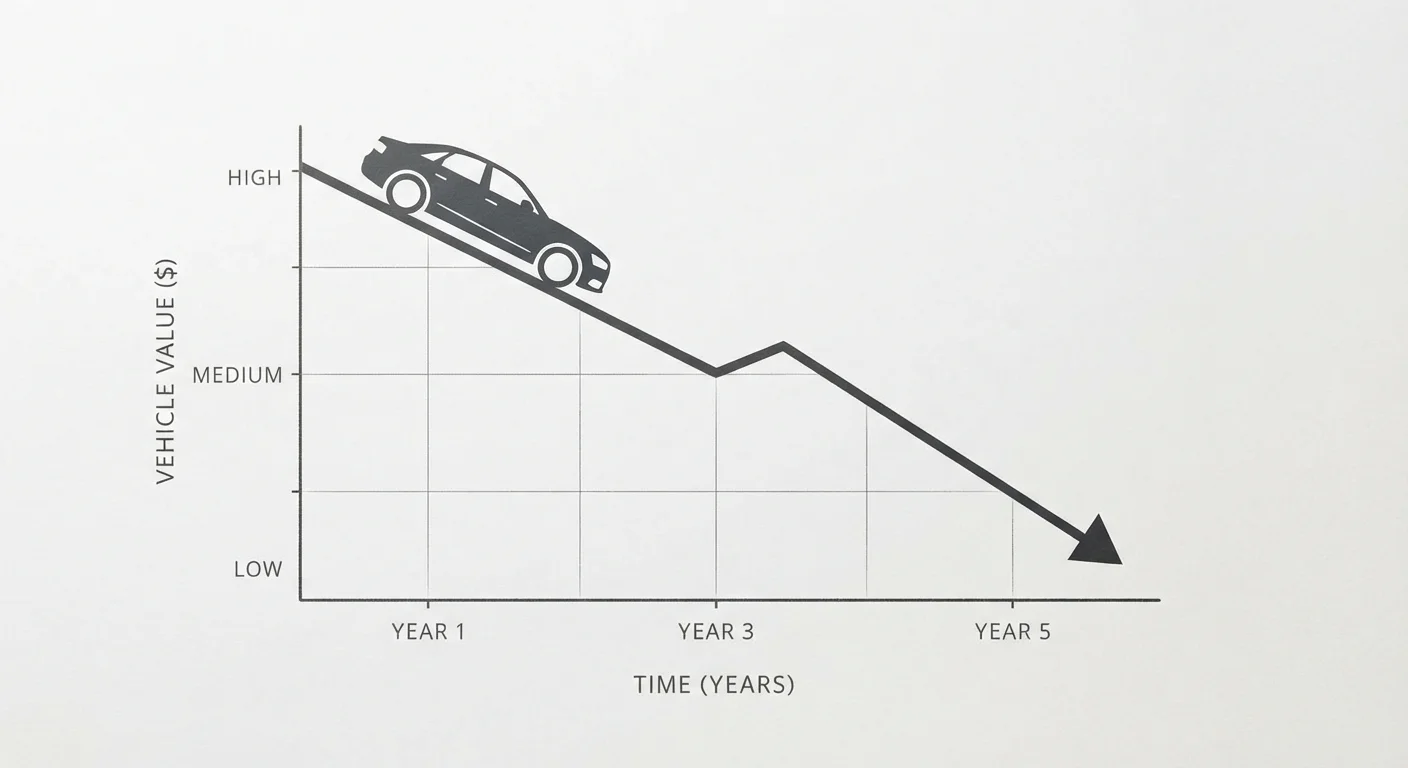
Car depreciation is the decline in a vehicle's monetary value over time. Every car loses value from the moment it's purchased, due to age, wear, mileage, and market conditions. This lost value represents a real cost to the owner, even if no money changes hands until the car is sold or traded in.
Depreciation is calculated as the difference between a vehicle's purchase price and its current market value, often expressed as a percentage of the original price lost per year.
What Depreciation Actually Means for Car Owners
When you drive a new car off the lot, its resale value drops immediately — sometimes by thousands of dollars. This isn't a flaw in the system; it's simply how vehicle markets work. The car transitions from "new" to "used" the moment ownership changes hands, and buyers won't pay new-car prices for a used vehicle.
Depreciation is not a fee you pay directly, but it is a genuine financial cost. If you buy a vehicle for $35,000 and sell it three years later for $22,000, that $13,000 difference represents money you spent simply by owning the car — separate from gas, insurance, or maintenance. For context, depreciation is widely considered the largest single cost of car ownership over a five-year period, often exceeding fuel costs.
Understanding this concept is central to grasping the true cost of owning a vehicle — the sticker price is just the starting point.
15–25%
Value lost in year one
Industry data consistently shows new vehicles lose a significant portion of their value within the first 12 months of ownership.
~50%
Average value lost after five years
Many mainstream vehicles retain only around half their original purchase price after five years, depending on make, model, and condition.
#1
Largest cost of ownership
Over a five-year period, depreciation is generally considered the single largest expense of owning a vehicle, surpassing fuel and insurance.
What Drives Depreciation — and What Speeds It Up
Several factors influence how quickly a vehicle sheds value:
- Age: Depreciation is front-loaded. The first year sees the steepest drop; the rate typically slows after years three through five.
- Mileage: Higher mileage signals more wear to future buyers and directly reduces resale value. Vehicles driven significantly above average annual mileage depreciate faster.
- Condition: Visible damage, interior wear, and unresolved mechanical issues all lower what a buyer will offer. A clean, well-maintained car retains more value.
- Market demand: Some body styles and vehicle types hold value better than others based on buyer preferences. Fuel prices also shift demand — when gas prices spike, fuel-efficient vehicles often retain value better.
- Brand reputation for reliability: Vehicles from manufacturers with strong reliability track records tend to depreciate more slowly because buyers have more confidence in their longevity.
Keeping up with scheduled service — oil changes, tire rotations, and other routine work — can modestly slow depreciation by demonstrating proper care. The car maintenance hub covers the essentials worth staying on top of.
How Depreciation Affects Your Ownership Decisions
Depreciation doesn't just matter when you sell — it shapes smart decisions throughout ownership. Buying a vehicle that is one to three years old means a previous owner has absorbed the steepest part of the depreciation curve, potentially offering you similar utility at a meaningfully lower price. This logic connects directly to the broader idea explored in buying once vs. buying cheap: a lower upfront price isn't always the real savings story.
Depreciation is also central to the buy-versus-lease question. When you lease, your monthly payments are partly a reflection of the depreciation expected during the lease term. Understanding that relationship helps you evaluate whether a lease deal is reasonable. For a full breakdown, see buying vs. leasing explained.
And if you're weighing whether to keep an aging vehicle or move on, remember that depreciation slows considerably on older cars — but repair costs tend to rise. That tradeoff is worth thinking through carefully, as covered in when repair costs outweigh the savings of keeping an older car.
Keep Records to Protect Resale Value
Maintaining a documented service history — receipts, records of oil changes, and any repairs — gives future buyers evidence that the car was well cared for. This can make a meaningful difference in what a private buyer or dealership offers you at trade-in time.
This article provides general financial education about vehicle depreciation and is not personalized financial or investment advice. Consult a qualified financial professional for guidance specific to your situation.