

Key Takeaways
Massive inventory of postings in one place
Job boards aggregate listings from thousands of employers simultaneously, making it fast to survey what's available across industries and locations without visiting dozens of individual company websites.
Easy to filter and compare roles at scale
Salary estimates, company reviews, and filtering tools let you quickly narrow options by commute, pay range, and job type — useful for understanding your realistic market value.
Good for identifying in-demand skills and keywords
Reading a large volume of job descriptions reveals the specific language employers use, which helps you tailor your resume to pass ATS screening systems more effectively.
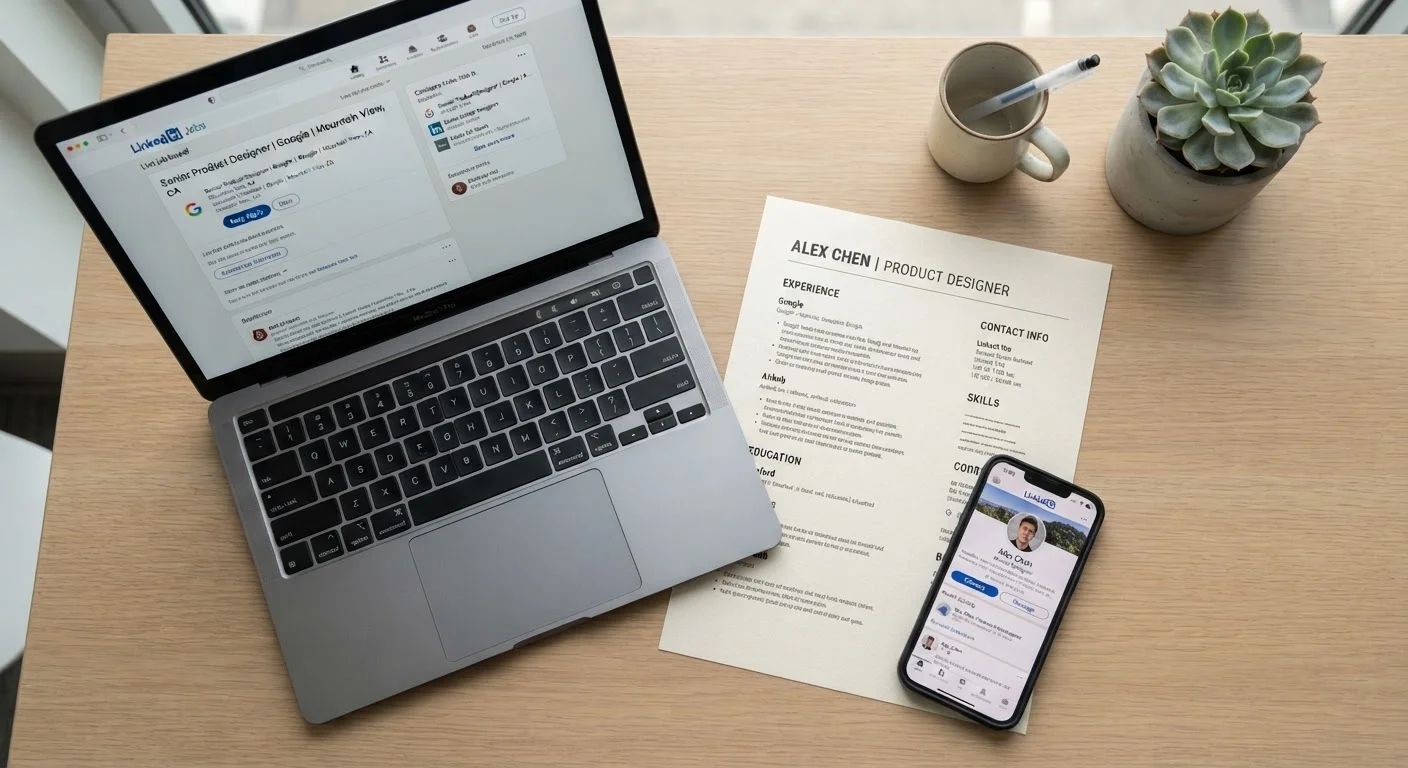
LinkedIn increases inbound recruiter contact
A well-optimized LinkedIn profile with relevant keywords allows recruiters to find you even when you haven't applied anywhere, opening doors to roles that may never appear on job boards.
Staffing agencies provide access to unadvertised roles
Many employers fill contract and direct-hire positions through agencies before or instead of posting publicly, giving agency candidates a pool of opportunities that most job seekers never see.
Agency placements can move faster than traditional applications
When a recruiter is actively pitching your profile to employers, the timeline from submission to interview is often shorter than applying cold through a job board.
Job boards generate intense applicant competition
Popular postings on major job boards routinely receive hundreds of applications within days. This makes it statistically difficult to stand out without a referral or a highly tailored application.
Many listings are outdated or misleading
Employers sometimes leave roles posted after filling them, or post to collect resumes speculatively. This wastes applicant time and skews the apparent volume of real opportunities.
Easy Apply on LinkedIn rarely converts well
One-click applications bypass the relationship-building that makes LinkedIn valuable, resulting in application volumes that mirror job boards without the competitive advantage of a network connection.
Staffing agencies work for employers, not job seekers
Because agencies are paid a fee by the hiring company, their priority is filling the role efficiently — not ensuring the position is the best long-term fit for the candidate.
Agency contract roles often lack benefits
Temporary and contract placements frequently don't include health insurance, paid leave, or retirement contributions, which can make them financially complicated depending on your situation.
LinkedIn networking requires consistent, ongoing effort
Building the kind of visibility and relationships that generate inbound opportunities takes months of consistent activity — it doesn't produce immediate results for someone who just activated their account.
Our Verdict
No single channel wins outright — each fills a different gap in a well-rounded job search. Job boards are best for volume and market research, LinkedIn is most powerful for networking and inbound visibility, and staffing agencies can unlock speed and access to unadvertised roles. The savvy job seeker treats all three as tools with different jobs to do, not as competing options.
Job seekers at any level who want to stop relying on one channel and start building a smarter, more diversified search strategy.
Job Boards: High Volume, High Competition
Job boards — Indeed, ZipRecruiter, Glassdoor, and industry-specific sites — are where most people start, and for good reason. They aggregate thousands of listings, let you filter by location, salary, and job type, and make it easy to track the market in real time. If you're trying to understand what roles exist or what skills employers are asking for right now, job boards are genuinely useful research tools.
The catch: you're competing with hundreds of other applicants for every listing. Many postings also run through Applicant Tracking Systems (ATS) that screen resumes before a human ever sees them. See our guide to ATS software to understand how those filters work and how to write through them.
Job boards also surface a lot of noise — outdated listings, phantom jobs posted to build a resume database, and roles that were already filled internally. Learning to read postings critically before you invest time in an application is a skill worth developing early.
Massive inventory of postings in one place
Job boards aggregate listings from thousands of employers simultaneously, making it fast to survey what's available across industries and locations without visiting dozens of individual company websites.
Easy to filter and compare roles at scale
Salary estimates, company reviews, and filtering tools let you quickly narrow options by commute, pay range, and job type — useful for understanding your realistic market value.
Good for identifying in-demand skills and keywords
Reading a large volume of job descriptions reveals the specific language employers use, which helps you tailor your resume to pass ATS screening systems more effectively.
LinkedIn increases inbound recruiter contact
A well-optimized LinkedIn profile with relevant keywords allows recruiters to find you even when you haven't applied anywhere, opening doors to roles that may never appear on job boards.
Staffing agencies provide access to unadvertised roles
Many employers fill contract and direct-hire positions through agencies before or instead of posting publicly, giving agency candidates a pool of opportunities that most job seekers never see.
Agency placements can move faster than traditional applications
When a recruiter is actively pitching your profile to employers, the timeline from submission to interview is often shorter than applying cold through a job board.
Use job boards for: market research, high-volume applying in well-defined roles, and identifying keywords to strengthen your resume.
Job boards generate intense applicant competition
Popular postings on major job boards routinely receive hundreds of applications within days. This makes it statistically difficult to stand out without a referral or a highly tailored application.
Many listings are outdated or misleading
Employers sometimes leave roles posted after filling them, or post to collect resumes speculatively. This wastes applicant time and skews the apparent volume of real opportunities.
Easy Apply on LinkedIn rarely converts well
One-click applications bypass the relationship-building that makes LinkedIn valuable, resulting in application volumes that mirror job boards without the competitive advantage of a network connection.
Staffing agencies work for employers, not job seekers
Because agencies are paid a fee by the hiring company, their priority is filling the role efficiently — not ensuring the position is the best long-term fit for the candidate.
Agency contract roles often lack benefits
Temporary and contract placements frequently don't include health insurance, paid leave, or retirement contributions, which can make them financially complicated depending on your situation.
LinkedIn networking requires consistent, ongoing effort
Building the kind of visibility and relationships that generate inbound opportunities takes months of consistent activity — it doesn't produce immediate results for someone who just activated their account.
LinkedIn: More Than an Online Resume
Most job seekers treat LinkedIn as a digital resume — they update it when searching and ignore it otherwise. That's leaving most of its value on the table. LinkedIn's real power lies in discoverability and relationship-building, not in its Easy Apply button.
Recruiters actively search LinkedIn for candidates who match open roles, even without a posting going live. A complete, keyword-rich profile increases the chances that inbound opportunities find you. That matters because, as explored in the hidden job market, a meaningful share of hires happen through connections before a role is ever advertised.
LinkedIn also facilitates the kind of warm outreach that separates successful job seekers from the pile. Connecting with people at target companies, commenting thoughtfully on industry content, and asking for informational conversations are all tactics that work even if networking makes you uncomfortable.
LinkedIn 'Open to Work': Use It Carefully
LinkedIn's 'Open to Work' feature lets you signal availability to recruiters, either publicly or only to recruiters using LinkedIn Recruiter. If you're searching while employed, the recruiter-only setting reduces — but doesn't eliminate — the risk of your current employer seeing the badge. Think through your situation before enabling it publicly.
The limitation: Easy Apply volume means many LinkedIn applications receive the same cold response rate as job boards. If you're applying through LinkedIn without engaging the network side of the platform, you're not using it to its potential.
Staffing Agencies: Speed and Access — With Trade-offs
Staffing agencies (also called recruiters or temp agencies, depending on the type) work differently than the channels above. Instead of searching yourself, a recruiter matches you to open roles — often ones that aren't publicly posted. This can create genuine access to opportunities, especially in fields like accounting, IT, healthcare support, legal, and light industrial work where agency placement is common.
The key thing to understand: staffing agencies are paid by the employer, not by you. Their incentive is to fill roles quickly with candidates who meet the job spec — not necessarily to find you the perfect long-term fit. Understanding what recruiters actually do helps you work with them strategically rather than deferring to them entirely.
~70%
Jobs filled through networking, not postings
Career development research has long estimated that a large majority of positions are filled through professional connections, referrals, or internal moves rather than public job board postings.
3M+
U.S. workers placed by staffing firms annually
According to the American Staffing Association, staffing companies place millions of workers in temporary and permanent positions each year across a wide range of industries.
75%
Resumes filtered before human review
Industry estimates suggest a significant majority of applications submitted to large employers are screened by ATS software before a recruiter or hiring manager ever sees them.
Temporary-to-permanent placements are increasingly common, making agency work a realistic path into a company rather than just a short-term fix. That said, contract roles may lack benefits, and you may have limited say over which companies your resume is submitted to — so ask upfront about their process.
For a broader look at how these channels fit into your overall approach, see what's actually changed in the modern job search.
Building a Channel Strategy That Works
The biggest mistake job seekers make is defaulting to one channel and treating the others as backups. A stronger approach is to assign each channel a specific role in your search. Use job boards to stay informed and apply selectively to well-matched postings. Use LinkedIn to build visibility and make direct connections at target employers. Use staffing agencies when speed matters or when you're open to contract work as a foot in the door.
Your mix should also shift depending on how long your search has been running. A two-week search and a six-month search call for different tactics — if board applications aren't converting after several weeks, it's a signal to lean harder into networking and direct outreach. The case for reaching out directly becomes stronger the longer you've been in the market.
None of these channels is magic. But used together with clear expectations, they give you a realistic shot at finding opportunities that match where you actually want to go.