

Key Takeaways
Why Star Ratings Are Incomplete by Design
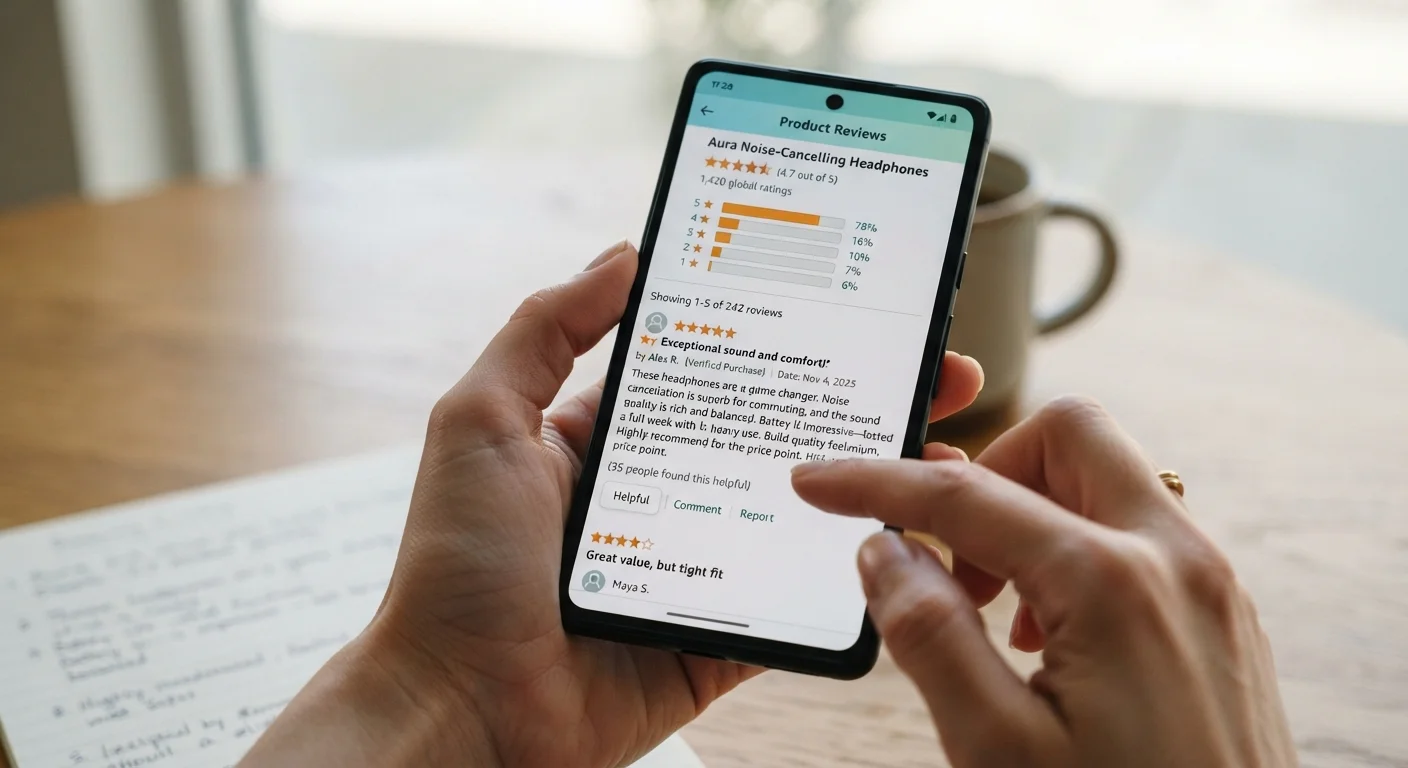
A star rating condenses dozens — sometimes thousands — of individual opinions into a single number. That compression is convenient, but it throws away most of the useful information. A product sitting at 4.1 stars could reflect universal moderate satisfaction, or it could be a mix of passionate fans giving five stars and frustrated buyers giving one. The average looks the same either way.
Review platforms are also not neutral arbiters. Sellers can request reviews from satisfied customers, respond to negative feedback in ways that influence public perception, and on some platforms, pay to have products featured prominently. Understanding these structural incentives is the first step toward reading reviews more critically. For a related look at how to evaluate retailers themselves, see warning signs of illegitimate online retailers.
Verified Purchase Doesn't Mean Unbiased
Most major platforms label reviews from confirmed buyers as 'verified purchases,' which does filter out some fabricated reviews. However, verified buyers can still receive post-purchase incentives — discounts, gift cards, or free products — in exchange for positive feedback. Always read the actual text, not just the label.
How to Extract Signal from the Noise
The practices below shift the focus from the headline number to the actual content of reviews — where the real information lives.
Sort by lowest ratings first, not highest.
Five-star reviews often describe best-case scenarios. One- and two-star reviews tend to surface real failure modes — durability problems, misleading descriptions, poor customer service — that matter more when you're making a purchasing decision.
Look for reviews that describe a use case matching yours.
A product that works perfectly for casual weekend use may disappoint someone who needs it daily. Reviews written by people with similar needs, contexts, or experience levels are far more predictive of your outcome.
Check the volume and date range of reviews, not just the score.
A product with 4.8 stars from 12 reviewers is statistically unreliable. Likewise, a product that earned strong reviews two years ago may have changed in quality, formula, or manufacturing since then.
Identify review patterns rather than treating each review as independent data.
Individual reviews can be outliers. When multiple reviewers independently mention the same flaw or strength, that repetition is a signal worth trusting — it's likely to reflect your experience too.
Cross-reference across multiple platforms before deciding.
Review ecosystems on different sites attract different buyer profiles and have different fraud-detection systems. A consistent picture across two or three independent sources is more reliable than a strong score on just one platform.
Flag reviews that are suspiciously generic or uniformly positive.
Authentic reviews tend to have specificity — they mention the reviewer's context, note trade-offs, and occasionally describe minor disappointments. Reviews that read like marketing copy, repeat the same phrases, or lack personal detail are common signs of coordinated or incentivized feedback.
These habits complement broader purchasing decisions. As explored in when paying more actually adds value, review quality — not just price — is one of the better proxies for whether a product will hold up.
Start Applying This Today
You don't need to overhaul your entire shopping process to read reviews more effectively. A few targeted changes to your existing habit make a significant difference.
These same critical-reading instincts apply beyond product reviews. Structured comparison shopping benefits from the same discipline: looking past surface signals to evaluate what actually matters for your specific needs. The goal isn't skepticism for its own sake — it's building enough context to make a decision you won't regret.