

Key Takeaways
Why Electrical DIY Carries Disproportionate Risk
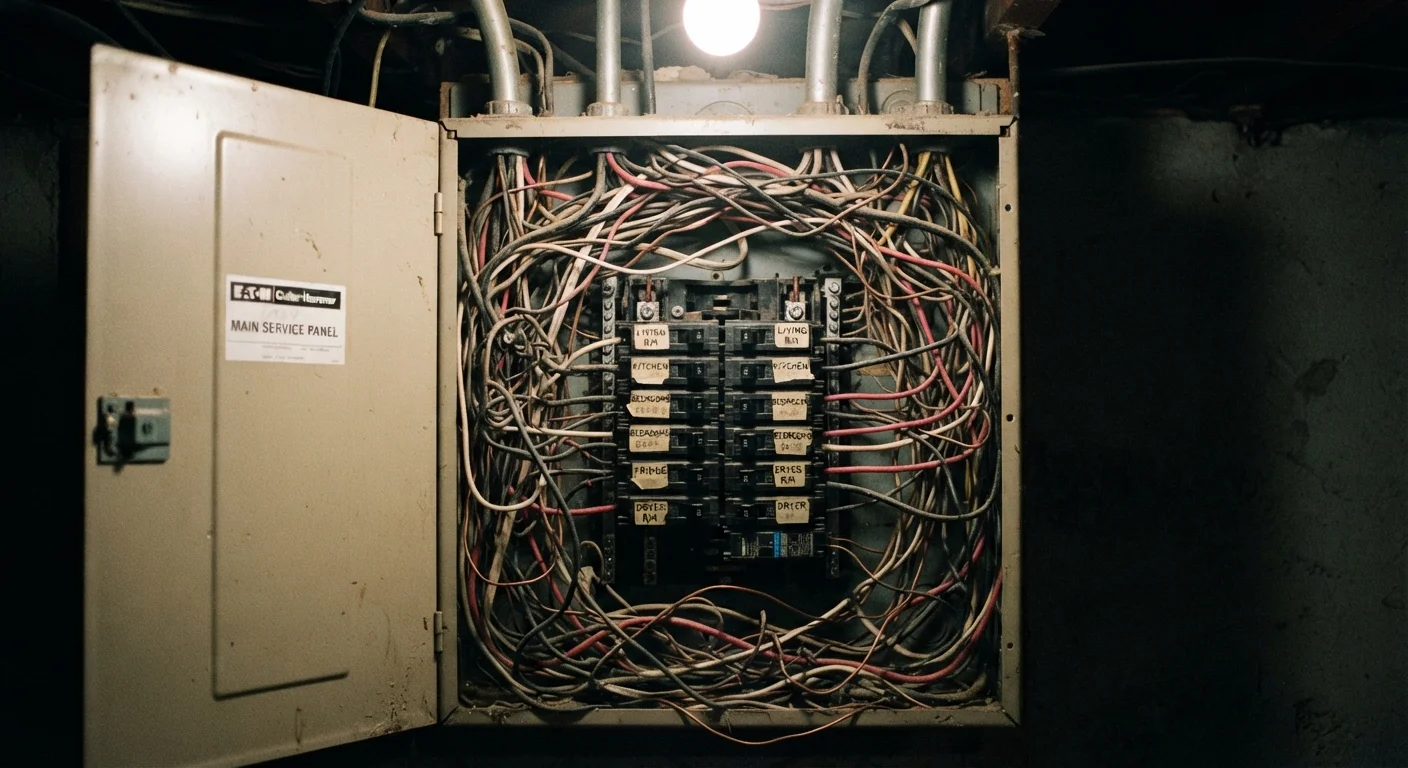
Most home improvement projects reward a careful, resourceful homeowner. Painting a room, installing a backsplash, or replacing a faucet all involve forgiving learning curves. Electrical work is fundamentally different. A wiring mistake may not reveal itself immediately — it can smolder inside a wall for months before triggering a fire or creating a shock hazard for your family.
The financial logic of DIY electrical work also breaks down quickly. What appears to be a straightforward outlet installation can uncover outdated wiring, require a permit, and demand materials and tools that erase any projected savings. When errors require a licensed electrician to diagnose and correct — sometimes involving opened walls and re-inspections — the total cost routinely exceeds what a professional installation would have cost in the first place. For a broader look at how costs compound across home projects, see our breakdown of real renovation costs.
~51,000
Home electrical fires per year in the U.S.
According to the Electrical Safety Foundation International (ESFI), electrical fires cause roughly 500 deaths and $1.3 billion in property damage annually.
40%
Of home electrical fires involving wiring or equipment
The U.S. Fire Administration has reported that wiring and related equipment are among the most common factors in residential electrical fires.
Common Mistakes That Turn Small Jobs Into Expensive Problems
The following errors appear regularly in amateur electrical work. Each one carries safety consequences and, in most cases, triggers code violations that require professional correction.
Undersizing or oversizing circuit breakers for the wiring gauge being used.
Why it happens: Homeowners often swap breakers based on what fits physically, not what the wire gauge and load demand. This mismatch is easy to overlook without electrical training.
Using the wrong wire type or gauge for the application.
Why it happens: Wire is wire to most untrained eyes. Without understanding ampacity ratings and the difference between indoor, outdoor, and in-wall wire types, it's easy to use whatever is on hand.
Making connections outside of an approved electrical box.
Why it happens: It can seem faster to splice wires inside a wall cavity or above a ceiling panel rather than installing a proper junction box.
Skipping the permit and inspection process entirely.
Why it happens: Permits take time and cost money, so many homeowners skip them, not realizing the downstream consequences.
Overloading circuits by adding outlets or appliances beyond the designed capacity.
Why it happens: It's tempting to add convenience outlets to an existing circuit rather than running a dedicated new line, especially in older homes with limited outlets.
Electrical Work Can Be Legally Regulated
In most U.S. states and municipalities, electrical work beyond simple fixture swaps requires a permit and inspection by a licensed electrician. Performing unpermitted work can result in fines, required tear-outs, insurance claim denials, and serious complications when selling your home. Always check your local building department before starting any electrical project.
Knowing When to Put Down the Wire Stripper
Some electrical tasks are genuinely within reach for a careful, informed homeowner — replacing a light switch or outlet on an existing, correctly wired circuit, for example. But there is a clear category of work that should always go to a licensed electrician: panel upgrades, new circuit runs, service entrance work, any task involving aluminum wiring, and work in kitchens, bathrooms, or outdoor locations where GFCI (ground fault circuit interrupter) requirements apply.
Don't Ignore Signs of Wiring Problems
Flickering lights, frequently tripping breakers, outlets that feel warm to the touch, or a burning smell near your electrical panel are warning signs that should never be ignored or self-diagnosed. These symptoms can indicate underlying issues that require immediate professional evaluation. Turn off the affected circuit and contact a licensed electrician promptly.
The same cost-versus-risk calculation applies to automotive systems — our article on DIY car maintenance vs. professional service walks through a similar decision framework. In both cases, honest self-assessment of your skills and the actual stakes involved leads to smarter choices than defaulting to DIY simply to save money.
If you're unsure whether your planned work requires a permit or a professional, your local building department or a brief consultation with a licensed electrician can answer the question quickly — often at no cost. That small step is nearly always cheaper than fixing a mistake after the fact.