
Decorating Styles Explained: From Minimalist to Maximalist and Everything Between

| Style spectrum anchors | Minimalist (least) → Maximalist (most) |
| Scandinavian key materials | Light wood, wool, linen, natural stone |
| Mid-century modern era | Roughly 1945–1969 |
| Industrial palette | Charcoal, concrete gray, rust, warm brown |
| Cottagecore signature elements | Floral prints, vintage ceramics, dried botanicals, linen |
| Minimalist color rule | Typically 2–3 neutral tones, no busy pattern |
Understanding the Decorating Spectrum
Interior decorating styles are less about strict rules and more about a coherent set of values — what a room prioritizes, how it uses space, and what emotions it's meant to evoke. Whether you lean toward spare and serene or layered and expressive, knowing the defining characteristics of each style helps you make intentional choices rather than random ones.
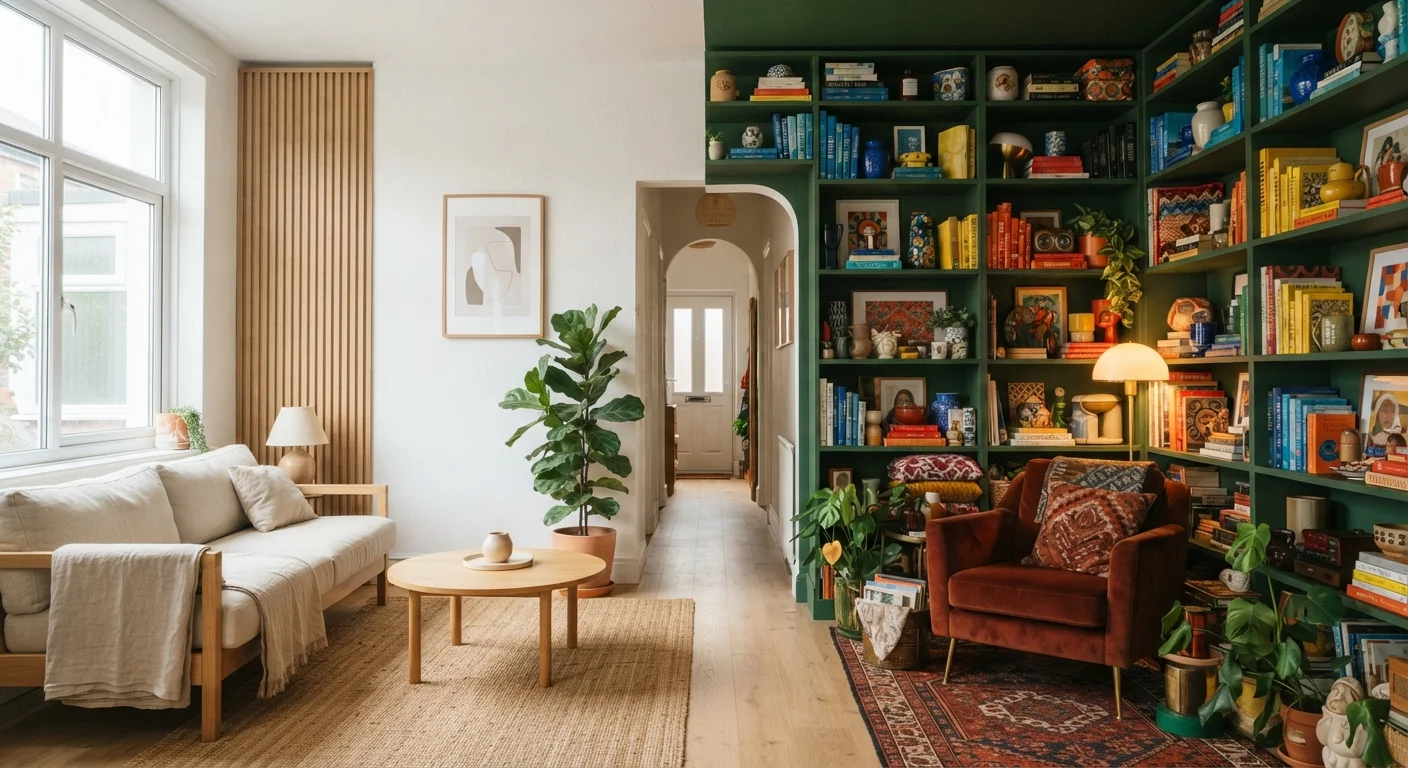
Think of decorating styles as a spectrum. At one end sits minimalism, which prizes empty space as a design element. At the other end is maximalism, which celebrates abundance, pattern, and personality. Most popular styles — Scandinavian, mid-century modern, cottagecore, industrial — fall somewhere between those poles, mixing practical function with a distinct aesthetic mood.
Understanding where a style sits on that spectrum helps you figure out which decorating rules are flexible and which core principles are worth keeping. It also makes mixing styles far less intimidating — most well-designed rooms borrow from more than one.
| Style spectrum anchors | Minimalist (least) → Maximalist (most) |
| Scandinavian key materials | Light wood, wool, linen, natural stone |
| Mid-century modern era | Roughly 1945–1969 |
| Industrial palette | Charcoal, concrete gray, rust, warm brown |
| Cottagecore signature elements | Floral prints, vintage ceramics, dried botanicals, linen |
| Minimalist color rule | Typically 2–3 neutral tones, no busy pattern |
A Style-by-Style Breakdown
Here's a clear look at the most common interior decorating styles and what actually defines each one.
Minimalist
Rooted in the idea that less is more, minimalist interiors feature a restrained color palette (often white, cream, or greige), very little decor, and furniture with clean, simple silhouettes. Storage is hidden; surfaces are clear. The goal is visual quiet — a space that feels deliberately edited.
Scandinavian
Scandinavian style grew from Nordic design traditions emphasizing warmth, function, and natural materials. Expect light wood tones, cozy textiles like wool throws and sheepskin, muted but not sterile color palettes, and a commitment to practical, well-crafted pieces. It overlaps with minimalism but is noticeably warmer and more livable.
Mid-Century Modern
Drawing from postwar American and European design (roughly 1945–1969), mid-century modern features tapered legs, organic curves, bold accent colors against neutral backgrounds, and a mix of natural and manufactured materials. Walnut wood, molded fiberglass, and teak are common. The style feels retro but remains highly adaptable.
Industrial
Inspired by converted warehouses and urban loft spaces, industrial style keeps structural elements visible — exposed brick, concrete floors, steel beams, and ductwork. Furniture tends to be solid and utilitarian, with a palette of charcoal, rust, and warm browns. The look is deliberately unfinished and undecorated.
Cottagecore
Cottagecore romanticizes rural and cottage life — think floral patterns, vintage furniture, botanical prints, dried flowers, mismatched ceramics, and natural fabrics like linen and cotton. Colors are soft and earthy. The overall feeling is nostalgic, handmade, and unhurried. It leans heavily into texture and pattern without feeling chaotic.
Maximalist
Maximalism embraces the idea that more is more — layered patterns, rich colors, collections on display, gallery walls, and abundant textiles. The key difference between maximalism and clutter is intention: every element is chosen for a reason, even if the overall effect feels abundantly full. Color, pattern, and personal meaning are the primary tools.
Minimalism
A design approach that treats empty space as a feature, using very few objects and a restrained color palette to create visual calm and order.
Maximalism
A decorating philosophy that embraces abundant color, pattern, and objects on display. The distinction from clutter is intentionality — every piece is chosen deliberately.
Organic forms
Shapes inspired by nature — curves, irregular edges, and flowing lines — rather than straight, geometric angles. Common in mid-century modern and cottagecore styles.
Palette
The overall collection of colors used consistently throughout a space. A cohesive palette is one of the fastest ways to make a room feel intentional and designed.
Texture layering
The practice of combining different surface qualities — rough, smooth, woven, soft — to add visual and tactile depth to a room without adding more color or pattern.
Silhouette
The overall outline or shape of a furniture piece when viewed as a whole. Clean, simple silhouettes read as modern; ornate or rounded silhouettes read as traditional or romantic.
Finding the Right Style for Your Home
No single style works for everyone, and the best interiors often blend two or three. A mid-century sofa in a Scandinavian room works beautifully; cottagecore textiles can soften an industrial kitchen. The key is identifying your dominant preference — what mood do you want a room to carry — and building outward from there.
Your lifestyle matters as much as aesthetics. If you have children or pets, highly minimal interiors can be harder to maintain. If you travel and collect objects, cottagecore or maximalism will give those pieces a natural home. Think honestly about how you actually live in each room before committing to a direction.
Budget doesn't need to limit style. Scandinavian and minimalist interiors can be built gradually — quality over quantity is the guiding principle. Cottagecore actively invites thrifted and vintage finds. Industrial style often repurposes inexpensive materials. The Buying Smart hub has practical guidance on evaluating pieces before you commit. Discovering your decorating style is closely tied to understanding your broader personal style, which takes time and experimentation — and that's completely normal.