

Key Takeaways
Our Verdict
Each therapy format has a legitimate place in mental healthcare. Individual sessions deliver depth and personalization; group therapy builds community and perspective; online therapy removes access barriers. The most effective choice is the one a person will actually engage with consistently — and that answer differs from one individual to the next.
| Best for | Recommended |
|---|---|
| Those dealing with complex personal history or trauma | Individual therapy |
| People seeking shared experience and reduced isolation | Group therapy |
| Those with limited local access, busy schedules, or cost concerns | Online therapy |
| People in different phases of ongoing mental health work | A combination of formats over time |
Why the Format You Choose Matters
Starting therapy is a significant step, but choosing how to engage with it is a decision many people overlook. The structure of your sessions shapes the therapeutic experience just as much as the approach your therapist uses. Before diving into comparisons, it helps to understand that no format is objectively better — each comes with trade-offs in privacy, cost, social dynamic, and accessibility.
If you're still getting familiar with mental health terminology, our guide on common mental health terms people misunderstand is a useful starting point. It's also worth considering how professional support compares to leaning on personal relationships — a question explored in depth in talking to someone you trust vs. seeing a therapist.
Individual Therapy: Private, Focused, and Flexible
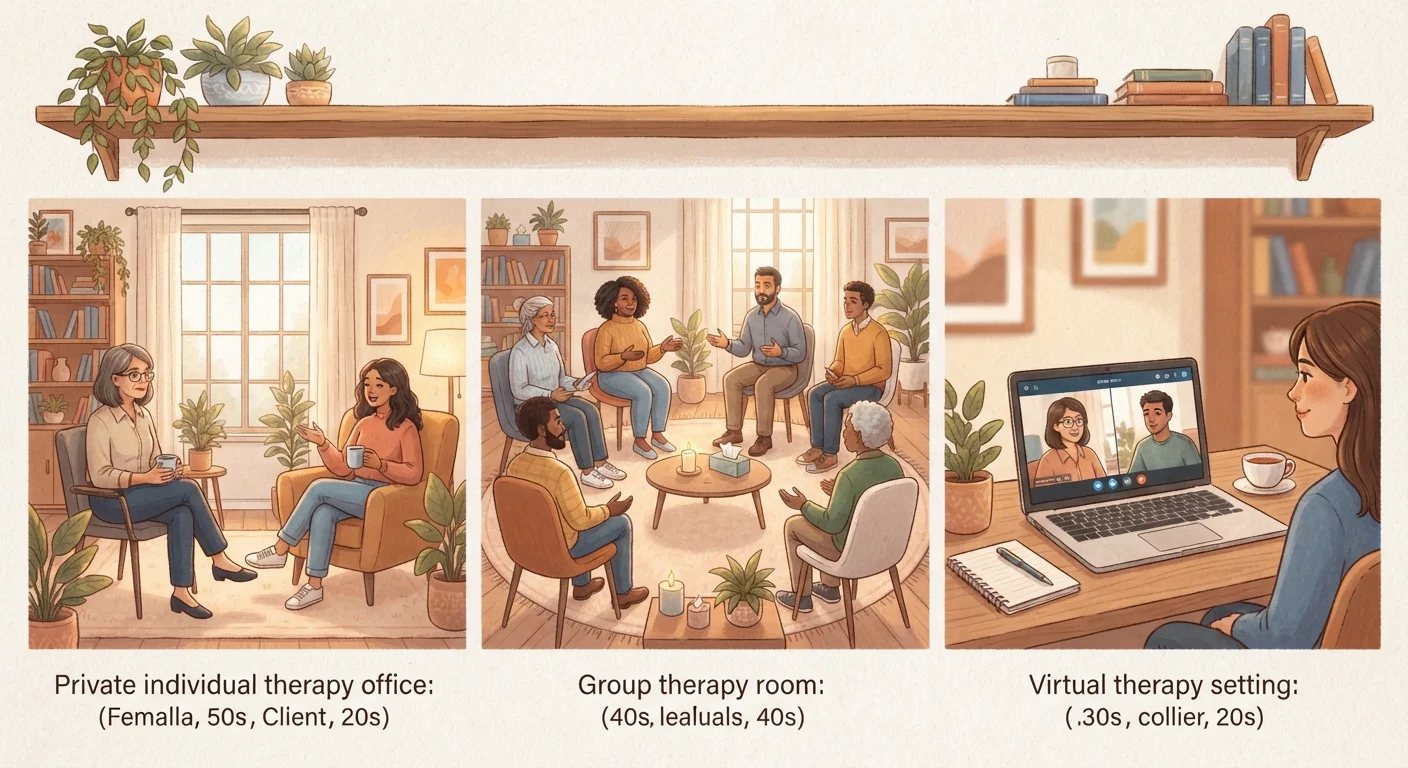
One-on-one therapy — where a single client works directly with a licensed therapist — remains the most familiar format. Sessions are tailored entirely to the individual, allowing the therapist to adjust their approach based on the person's specific history, goals, and pace.
This format tends to suit people working through trauma, relationship difficulties, anxiety, depression, or conditions that require a high degree of confidentiality and personal attention. The therapeutic relationship itself — often called the therapeutic alliance — is considered one of the strongest predictors of positive outcomes in this format.
The primary drawback is cost. Individual sessions are typically the most expensive option, and insurance coverage varies considerably. Session frequency, therapist availability, and geographic location all influence access.
Ask About Format Before Committing
When contacting a therapist or clinic for the first time, it's reasonable to ask what session formats they offer and whether they have experience with your specific concerns. A brief consultation — often free — can help you assess fit before committing to ongoing sessions. Being honest about practical constraints like budget and schedule helps a clinician suggest the most workable option.
Group Therapy: Shared Experience as a Therapeutic Tool
Group therapy involves one or more therapists working with multiple clients — usually between five and fifteen people — at the same time. This is a clinically structured setting, not a support group or informal meetup. Sessions may be organized around a shared concern (grief, anxiety, substance recovery) or be more general in focus.
The mechanism of change in group therapy is partly different from individual work. Hearing others articulate similar struggles can reduce the sense of isolation that many people carry. Witnessing other group members progress can also build hope. Interpersonal dynamics within the group become part of the therapeutic material itself.
Group sessions are generally more affordable than individual therapy, making them a meaningful option for people managing costs. However, the shared setting means less time focused on any one person's needs, and some individuals find it difficult to open up in front of others — particularly early on.
| Individual Therapy | Group Therapy | Online Therapy | |
|---|---|---|---|
| Session focus | Entirely on one person | Shared across all members | One-on-one or group, remote |
| Typical cost | Higher per session | Lower per session | Variable; often mid-range |
| Privacy level | High — fully private | Lower — shared setting | High, with digital caveats |
| Social connection | Therapist only | Peers and therapist | Therapist only (usually) |
| Accessibility | Limited by geography/cost | Limited by availability | High — location-flexible |
| Best suited for | Complex personal issues, trauma | Isolation, shared struggles | Access barriers, flexibility needs |
Online Therapy: Accessibility with Caveats
Online therapy — delivered via video call, phone, or in some cases asynchronous messaging — expanded rapidly as a format over the past several years. For many people, it has removed real barriers: geographic distance from qualified therapists, mobility limitations, demanding work schedules, or stigma associated with visiting a clinic.
Research suggests that for many common concerns, such as anxiety and mild-to-moderate depression, video-based therapy can be as effective as in-person sessions. However, clinicians note that some presentations — including severe psychiatric conditions or situations requiring physical crisis intervention — are better served by in-person care.
Technical issues, concerns about digital privacy, and the absence of the physical cues a therapist reads in a room together are legitimate limitations to weigh. The quality of online therapy also varies considerably depending on the platform and clinician — credentials and licensing standards still apply regardless of delivery method.
~41%
Adults who received mental health treatment online
According to the CDC's National Center for Health Statistics, around 41% of adults who received mental health treatment in a recent survey period used telemedicine for at least some of their care.
5–15
Typical group therapy session size
The American Psychological Association notes that most structured group therapy sessions involve between five and fifteen participants to allow meaningful therapist attention and group interaction.
How to Think About Which Format Fits You
Practical factors — cost, schedule, location, and insurance — inevitably shape the decision. But beyond logistics, it's worth reflecting on what you're hoping to get from therapy. Are you seeking a highly private space to process a specific experience? Individual therapy is likely the better fit. Do you feel that connection with others who share similar challenges would be meaningful? Group therapy may offer something individual sessions cannot replicate. Is access the main barrier — time, distance, or discomfort with in-person settings? Online therapy may make consistent engagement possible in a way that other formats don't.
Many people also move between formats over time. Someone might begin in individual therapy, then join a group once they're more comfortable with the process. Others start with an online format and later transition in-person as circumstances change. Flexibility is not a sign of inconsistency — it can reflect thoughtful, evolving self-awareness.
Cost is a real consideration for many families. If you're working within a budget, general frameworks for managing household finances — like those covered in common savings frameworks — may help you think through how to allocate resources toward mental health care alongside other priorities.
This article is for general informational purposes only and does not constitute medical or mental health advice. Please consult a qualified, licensed mental health professional for guidance specific to your situation.