

Key Takeaways
Extended Vehicle Warranty
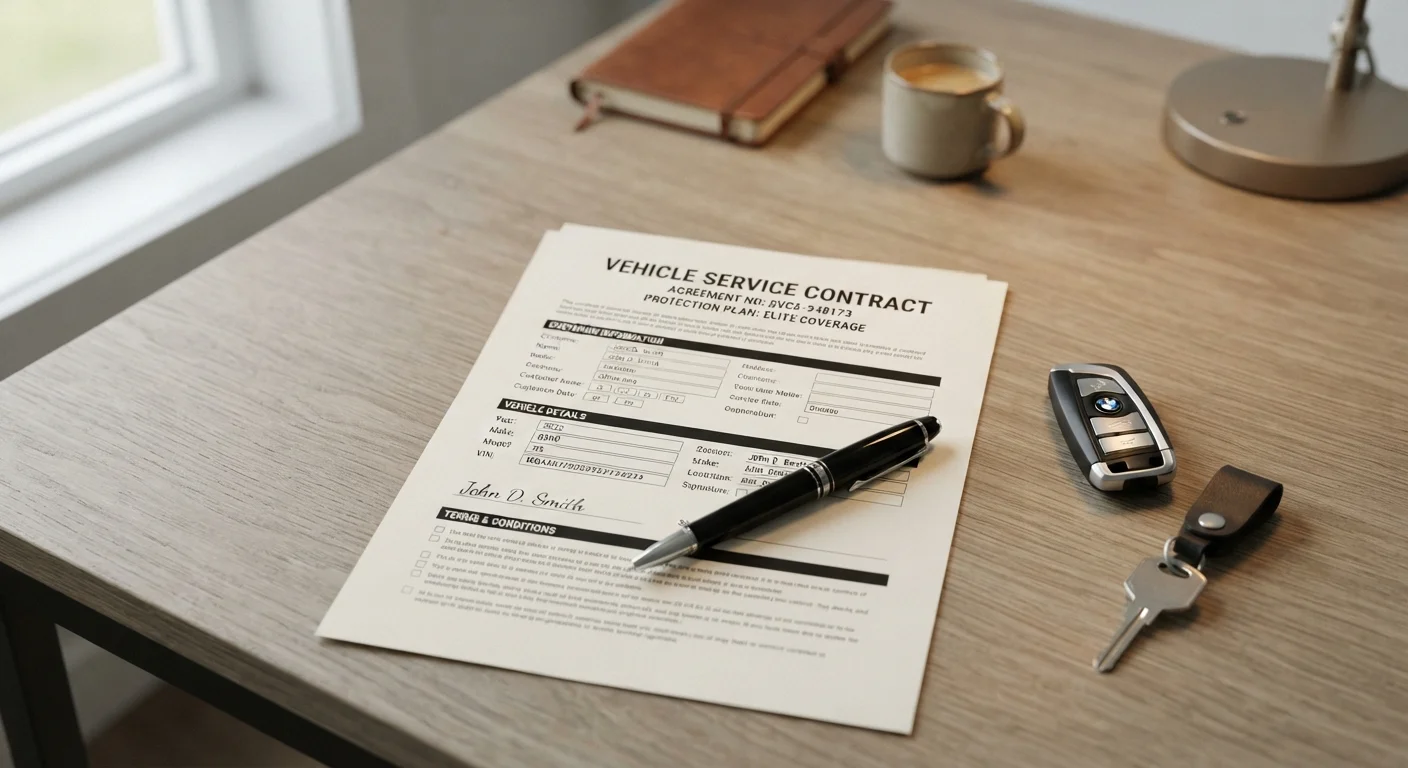
An extended vehicle warranty — more accurately called a vehicle service contract — is an agreement you purchase separately from your vehicle that promises to cover the cost of certain repairs after your original manufacturer's warranty expires. These contracts are sold by automakers, dealerships, and independent third-party companies. Coverage, cost, and terms vary significantly depending on who issues the contract and what plan you select.
Legally, most of these products are service contracts, not warranties, under the Magnuson-Moss Warranty Act. The distinction matters because service contracts are regulated differently and carry different consumer protections than written warranties.
What These Contracts Actually Are
The phrase "extended warranty" is used loosely in the marketplace, but most of these products are technically vehicle service contracts. That label matters. A service contract is a separate agreement — a promise that a specific company will pay for certain repairs under specific conditions. It is not an extension of the original manufacturer's coverage. For more on how these differ from factory warranties, see our guide on the difference between a manufacturer's warranty and an extended warranty.
These contracts are sold through three main channels: automakers (sometimes called certified or factory-backed plans), franchised dealerships acting as resellers, and independent third-party companies. Who issues the contract affects how claims are handled, which repair shops you can use, and what legal recourse you have if a dispute arises.
What the Fine Print Typically Includes — and Excludes
Most contracts list covered components one of two ways: an inclusionary list (naming only what is covered) or an exclusionary list (naming only what is not covered, covering everything else). Exclusionary plans — often marketed as "bumper-to-bumper" — are generally broader, but they still carry significant exceptions.
55%
Extended warranty owners who never file a claim
According to a Consumer Reports survey, a majority of extended warranty purchasers reported never using the coverage during the contract period.
#1
Most common reason for claim denial
Failure to obtain pre-authorization before repairs begin is widely cited by consumer protection advocates as the leading cause of extended warranty claim rejections.
30 days
Typical minimum waiting period before coverage activates
Most vehicle service contracts include a waiting period after purchase, during which any repairs needed are not eligible for reimbursement.
Common exclusions you will find in the fine print:
- Maintenance items: Oil changes, filters, brake pads, and tires are almost never covered.
- Wear-and-tear components: Belts, hoses, clutch linings, and wiper blades typically fall outside coverage.
- Pre-existing conditions: Damage or deterioration present before the contract start date is routinely excluded.
- Cosmetic and exterior items: Paint, upholstery, glass, and trim are frequently listed as excluded.
- Non-mechanical systems: Many contracts exclude or limit coverage of infotainment screens, navigation, and advanced driver-assistance systems (ADAS).
- Neglect or improper maintenance: A provider may deny a claim if you cannot demonstrate that required maintenance was performed on schedule.
Understanding exclusions is often more useful than understanding inclusions. A plan that covers the engine but denies a claim because maintenance records are incomplete provides far less value than it appears on paper. For a broader look at how warranty language can mislead consumers, see common warranty myths that cost shoppers money.
The Claims Process and Hidden Requirements
Filing a claim under a vehicle service contract is rarely as simple as dropping the car at a shop. Most contracts include procedural requirements that, if missed, can result in a denied claim — regardless of whether the repair itself would otherwise be covered.
Ask for the Contract Before You Commit
Any reputable extended warranty provider should be willing to give you the full written contract to review before you agree to purchase. Take time to read the exclusions list, the claims process section, and the cancellation terms. If a provider pressures you to sign the same day without time to review, treat that as a warning sign.
Key procedural terms to look for in any contract:
- Pre-authorization: Many plans require you to call the warranty company before any work begins. Authorizing repairs without this step is a frequent basis for claim denial.
- Approved repair facilities: Some contracts restrict you to a network of shops. Others allow any licensed facility but require detailed documentation from the mechanic.
- Deductibles: These vary by plan — some charge a flat fee per visit, others per covered component repaired. Know which structure your contract uses.
- Waiting periods: Many contracts include a waiting period after purchase — often 30 days or 1,000 miles — before coverage becomes active.
- Cancellation terms: Most contracts allow cancellation and a prorated refund, but the process and timeline for refunds differ by provider and state law.
The Magnuson-Moss Warranty Act governs written warranties on consumer products sold in the U.S. and provides some baseline protections, but its application to service contracts has important nuances — see how the Magnuson-Moss Warranty Act protects consumers for a full explanation of what federal law does and does not guarantee.
How to Evaluate a Contract Before Signing
Verbal assurances from a salesperson are generally not binding. Your legal rights under implied warranties exist separately, but they do not fill gaps in a poorly written service contract. The written document is what counts.
Before signing any extended warranty or service contract, work through these practical checks:
- Request the full sample contract in writing before agreeing to purchase — any provider unwilling to share this document upfront is a significant red flag.
- Identify whether the coverage is inclusionary or exclusionary, and read the exclusions list carefully.
- Confirm which repair facilities are accepted and what documentation those shops must provide.
- Verify the pre-authorization requirements and the claims phone number you would use in practice.
- Research the issuing company's reputation and, if applicable, check whether your state's insurance department has licensing records for the provider.
- Calculate the total cost of the contract — including deductibles — against a realistic estimate of repair likelihood for that vehicle model.
This article provides general information about vehicle service contracts and is not legal or financial advice. For decisions specific to your situation, consult a qualified professional.