

Key Takeaways
Skin Barrier
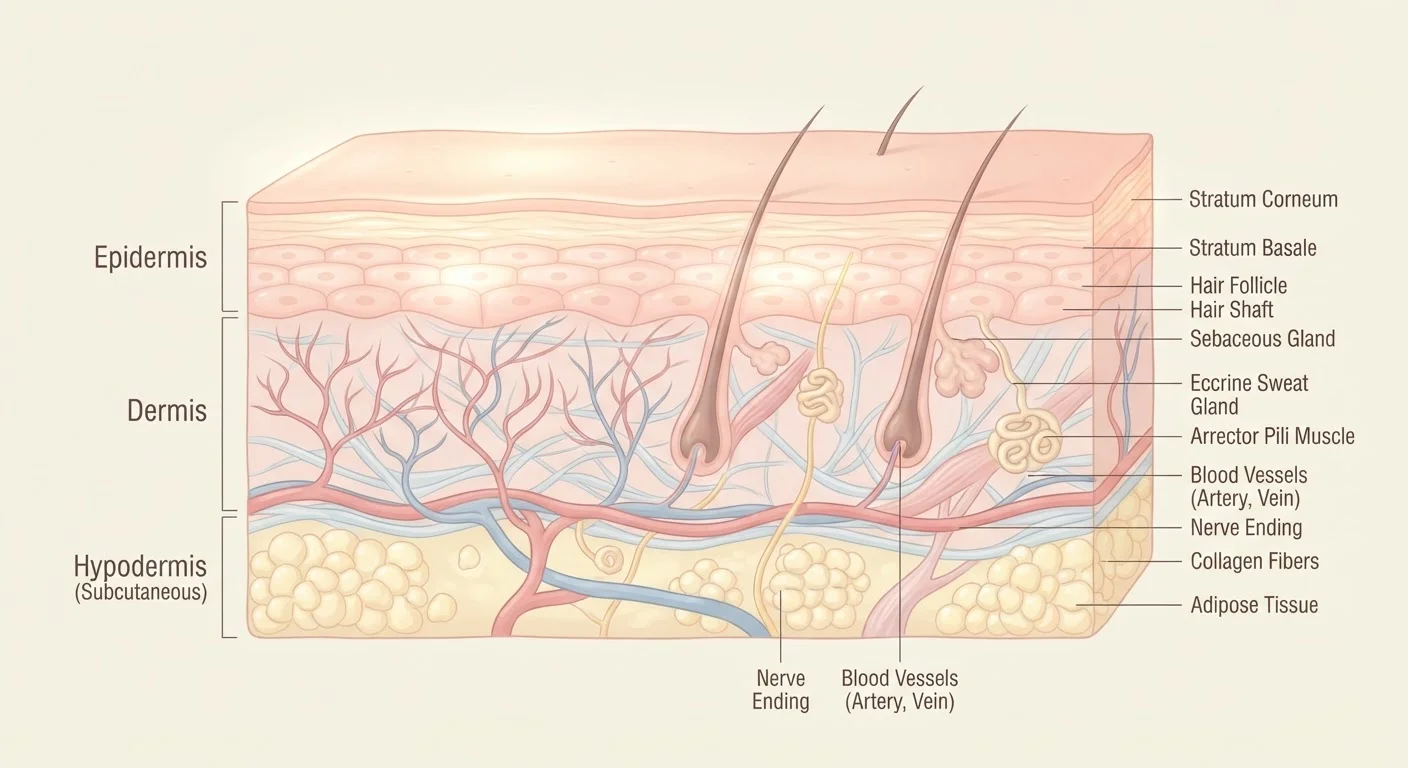
The skin barrier — formally called the stratum corneum — is the outermost layer of your skin. Think of it as a tightly fitted wall of flattened skin cells (called corneocytes) held together by lipids like ceramides, cholesterol, and fatty acids. Its main job is to keep moisture in and harmful things like bacteria, pollution, and irritants out. When it's working well, skin looks calm, feels comfortable, and stays hydrated.
The lipid matrix between corneocytes is often described using a 'brick and mortar' model — cells are the bricks, lipids the mortar. Disruption to either component compromises the barrier's permeability and defensive function.
Why the Skin Barrier Deserves Your Attention
Skincare marketing often focuses on glow, texture, and anti-aging — but underneath every serum and moisturizer goal is a single foundational question: is your skin barrier actually intact? Without a healthy barrier, even a thoughtfully chosen routine can feel ineffective, because products can't compensate for a compromised outer layer that's losing moisture faster than it's absorbing it.
The skin barrier isn't just a passive surface. It actively regulates hydration, maintains the skin's natural slightly acidic pH, and triggers immune responses when pathogens try to enter. When it's healthy, you often don't notice it at all. When it's struggling, you feel it — tightness, sensitivity, redness, and an overall sense that your skin is just not cooperating.
Understanding how this layer works is the single most useful foundation you can build before adding any new product to your routine. If you're starting from scratch, building your first skincare routine becomes a lot more intuitive once you know what you're actually trying to protect.
“The skin barrier is the foundation of all skincare. When it's compromised, nothing else in your routine works as intended — and when it's healthy, you need far less to maintain good skin.”
— Leslie Baumann, Board-certified dermatologist and founder of the Baumann Skin Type research classification system
Everyday Habits That Quietly Undermine Your Barrier
Most barrier damage isn't caused by a single dramatic event — it accumulates through small, repeated choices that seem harmless. Here are the most common culprits:
- Hot showers and over-washing: Hot water and frequent cleansing strip the skin's natural oils and lipids. Dermatologists generally recommend lukewarm water and cleansing no more than twice daily for most skin types.
- Harsh or foaming cleansers: Sulfate-heavy formulas can disrupt the skin's slightly acidic pH and remove protective lipids. Look for cleansers described as gentle or pH-balanced instead.
- Aggressive exfoliation: Physical scrubs and high-concentration acids used too frequently thin the lipid mortar between skin cells. More isn't better — consistency and gentleness are.
- Skipping moisturizer: Even oily skin needs hydration support. Skipping this step means the barrier has less help retaining water.
- Unprotected UV exposure: Sunlight degrades skin lipids and proteins over time, progressively weakening the barrier. Daily broad-spectrum sunscreen is one of the most consistent protective habits supported by research.
~30%
Of skin's lipid matrix is ceramides
Research estimates that ceramides make up roughly 30–40% of the intercellular lipid content in the stratum corneum, underscoring why they're central to barrier function.
2–4 weeks
Typical skin cell turnover cycle
The outer skin layer naturally renews itself roughly every two to four weeks; habits that accelerate or interrupt this cycle can significantly affect barrier integrity.
How to Support and Restore Your Skin Barrier
The good news: the skin barrier is designed to repair itself when given the right conditions. Supporting it doesn't require an expensive or complicated routine — in fact, simplifying is often the most helpful first step.
Prioritize a gentle cleanser. A mild, fragrance-free formula that doesn't leave your skin feeling tight after rinsing is a solid baseline. Tight, squeaky-clean skin after washing is actually a signal of over-cleansing, not freshness.
Use a moisturizer that includes barrier-supporting ingredients. Ceramides, fatty acids, cholesterol, and humectants like glycerin and hyaluronic acid are well-supported by research for maintaining and restoring moisture balance. You don't need to spend a lot — prioritizing a few effective steps goes further than a shelf of specialty products.
Apply SPF every day. Consistent sunscreen use protects the barrier from the cumulative lipid degradation caused by UV exposure, not just sunburn.
Adjust with the seasons. Cold, dry air in winter accelerates water loss through the skin, while humid summers shift sebum production. Seasonal routine adjustments can make a meaningful difference in maintaining barrier integrity year-round.
The Simplest Barrier Reset Routine
If your skin feels reactive or irritated, strip your routine back to three steps: a gentle cleanser, a ceramide-containing moisturizer, and SPF in the morning. Pause actives like exfoliating acids or retinoids for one to two weeks. This gives the barrier space to repair without additional stress from active ingredients.
This article is for general informational purposes only and does not constitute medical or dermatological advice. If you are experiencing persistent skin concerns, please consult a qualified healthcare professional or dermatologist.