

Key Takeaways
Why Your Scalp Deserves Attention
When most people think about healthy hair, they focus on the strands — split ends, shine, softness. But the scalp is where hair actually begins, and its condition directly influences what grows from it. Think of it like soil: healthy, balanced soil produces strong plants. The same logic applies here.
The scalp is living skin — complete with sebaceous (oil) glands, hair follicles, and a microbiome of its own. When it's out of balance, you may notice flaking, itchiness, excess oiliness, or sluggish hair growth. None of that shows up first in your ends — it starts at the root. Just as a consistent skincare routine supports your face, a simple scalp routine supports everything above the neck too.
Best Practices for a Balanced, Healthy Scalp
You don't need a complicated regimen to care for your scalp well. A handful of consistent habits makes a meaningful difference.
Wash your scalp at a frequency that matches your scalp type
Over-washing strips natural oils, triggering rebound oiliness or dryness. Under-washing allows product buildup and dead skin to clog follicles. Finding the right cadence for your specific scalp — oily, dry, or combination — keeps the environment balanced.
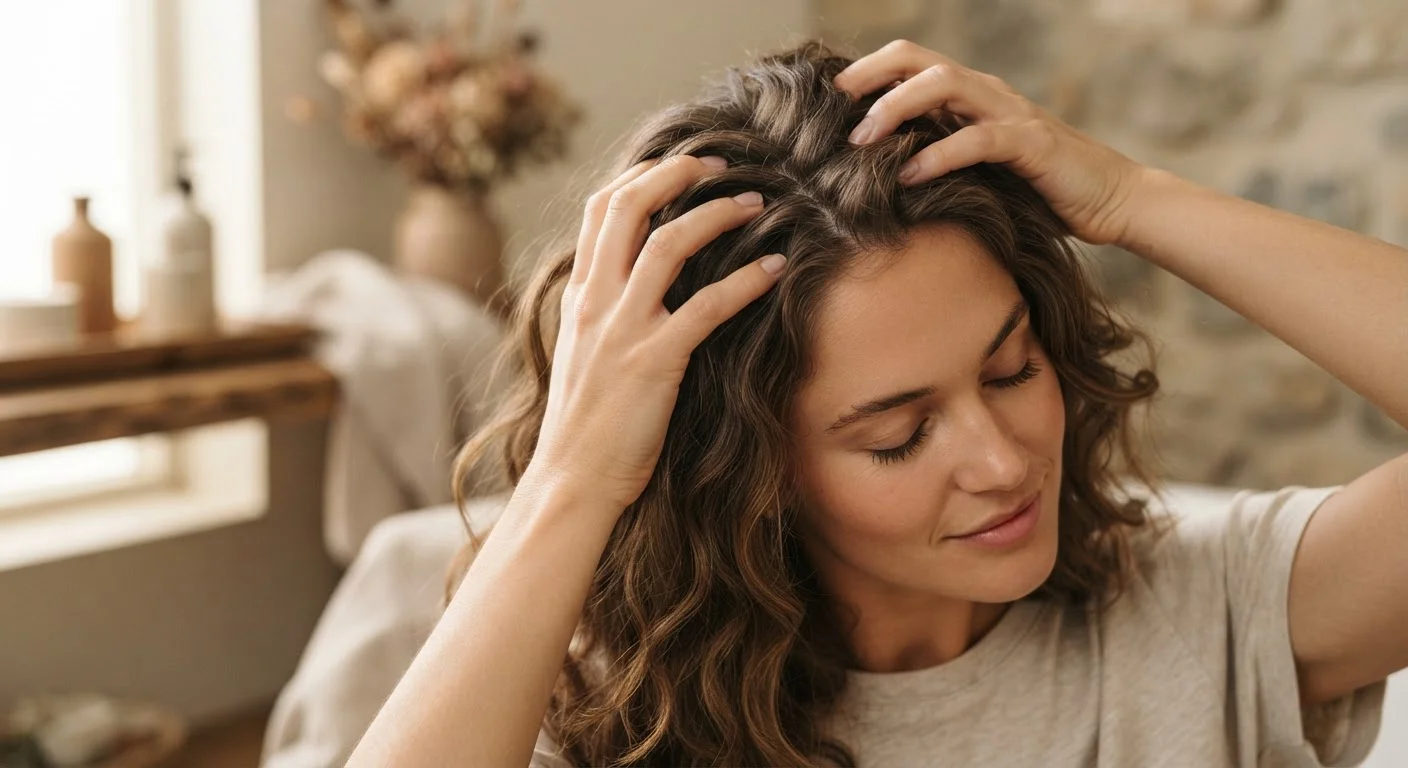
Incorporate a gentle scalp massage into your routine
Scalp massage stimulates circulation to the hair follicles and helps loosen buildup before shampooing. It also doubles as a low-effort stress-relief habit — and stress is a well-documented contributor to hair shedding.
Use a scalp-focused shampoo rather than relying solely on hair-focused formulas
Many shampoos are formulated primarily to cleanse and condition strands, not to address the scalp's specific pH and microbiome needs. A gentle, sulfate-free formula that cleanses the scalp thoroughly without over-stripping is a more targeted approach.
Exfoliate the scalp occasionally to clear buildup
Just like facial skin, the scalp accumulates dead skin cells, sebum, and styling product residue. Occasional gentle exfoliation — once or twice a month for most people — helps prevent congestion around follicles.
Avoid applying heavy leave-in products directly onto the scalp
Thick creams, oils, and serums applied at the root can accelerate buildup, clog follicles, and create conditions where fungal overgrowth or flaking becomes more likely. Most conditioning treatments are meant for the mid-lengths and ends.
Pay attention to how your scalp responds to stress, diet, and sleep
The scalp doesn't exist in isolation. Nutritional gaps, poor sleep, and chronic stress can all show up as increased shedding, itchiness, or a flare-up of conditions like seborrheic dermatitis. Supporting overall wellness supports scalp health too.
Pairing these habits with a thoughtful full-week hair care routine helps you maintain your scalp's balance between washes, not just on wash day.
Quick Wins to Start Today
You don't have to overhaul your entire routine at once. A few small changes can shift things noticeably within a few weeks.
This article is for general informational purposes only and does not constitute medical advice. If you're experiencing persistent scalp discomfort, significant hair shedding, or other symptoms that concern you, please consult a qualified dermatologist or healthcare professional.