

Key Takeaways
Why a Full-Week Approach Matters
Most hair-care advice stops at wash day — but the choices you make on days two through seven are just as important as what happens in the shower. Hair is at its most vulnerable when it's wet, and it needs consistent attention throughout the week to stay strong, moisturized, and manageable.
Think of your wash cycle as a rhythm rather than a single event. Each day builds on the last, and small habits — how you sleep, how you refresh, and how you protect your hair — compound into noticeably healthier strands over time. This guide walks you through every phase, from shampooing technique to the final protective style before your next wash day.
Wash Day: Getting the Foundation Right
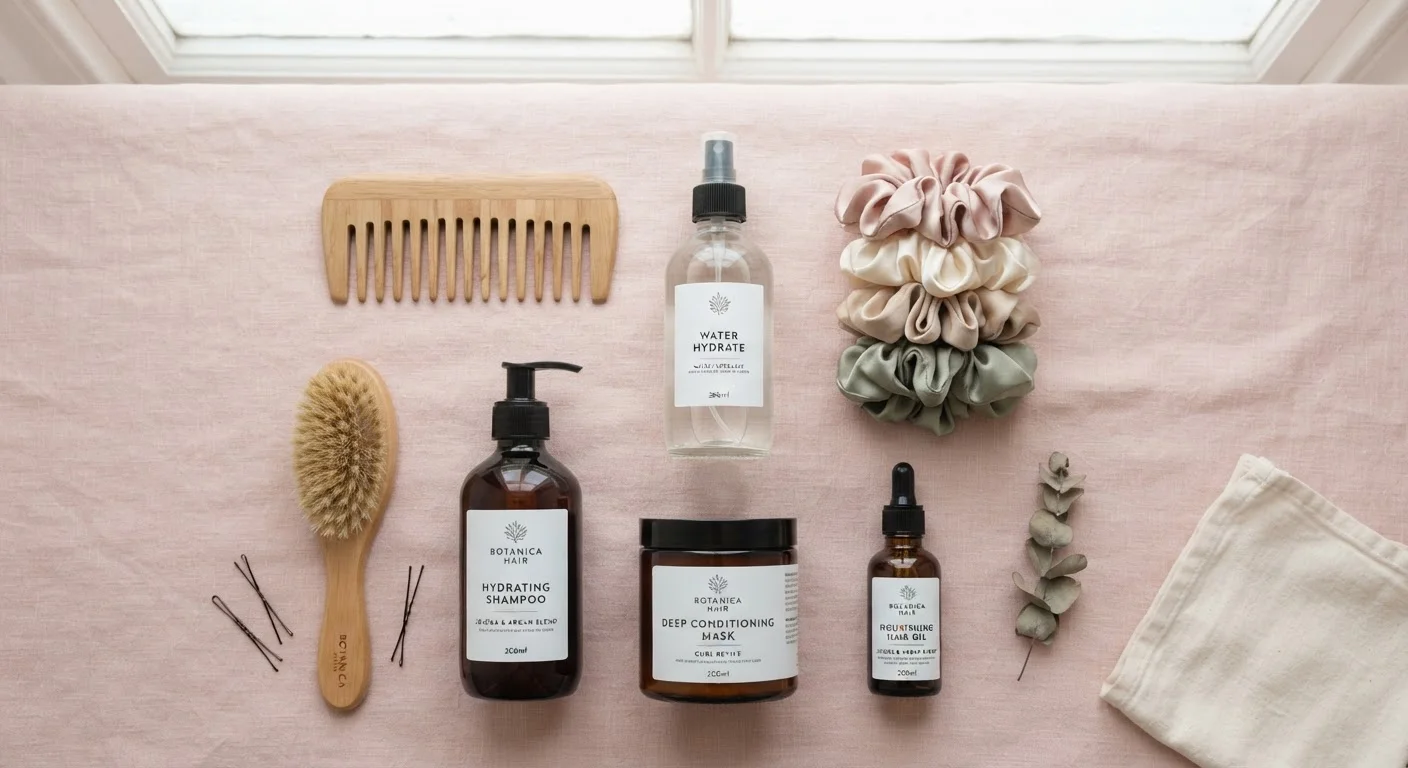
Wash day sets the tone for the entire week. Before stepping into the shower, gently detangle hair with a wide-tooth comb starting at the ends and working your way up. This prevents matting and reduces breakage when hair is wet.
When shampooing, focus the product on your scalp — not the lengths. Massage gently with your fingertips (not fingernails) in small circular motions to stimulate circulation and lift buildup. The shampoo will rinse through the ends as it washes out, which is usually enough cleansing for those areas.
Conditioner does the opposite: apply it from mid-shaft to ends, avoiding the scalp. Leave it on for at least two to three minutes — or use a deep conditioner for five to ten minutes if your hair is dry or color-treated. Rinse with cool water to help seal the cuticle and add shine.
Pre-detangle before every wash to cut down on breakage significantly. Wet hair stretches more than dry hair, and working out knots beforehand means far less stress on each strand.
Hair in a wet state has reduced tensile strength, making it more prone to snapping under combing tension — detangling dry or damp hair first protects it.
Apply conditioner to soaking-wet hair rather than hair you've squeezed out first. The extra water helps distribute the product evenly and dilutes it just enough to coat without overloading fine or thin strands.
Even product distribution ensures every section of hair benefits, reducing the patchiness that leads to some areas feeling dry while others feel weighed down.
Pat — don't rub — hair dry with a microfiber towel or a clean cotton T-shirt. Rubbing with a regular terrycloth towel roughens the cuticle, which leads to frizz and breakage. If you use heat tools to style, check out our companion article on how heat affects your hair's structure to make smarter choices about frequency and protection.
Day 2–3: Locking in Moisture and Style
The day or two after wash day is prime time to lock in your style and keep moisture levels high. If you styled your hair while it was damp, day two is usually when curls, waves, or blowouts look their best — so protect what's there rather than redoing it.
A light hold product or a small amount of hair oil applied to the palms (then smoothed over the surface) can tame frizz without weighing hair down. Focus on the areas that tend to dry out fastest, typically the ends and the hairline.
Keep Hands Off for Longer-Lasting Style
Try setting a personal rule: style once, then leave it alone. Repeatedly touching and re-arranging hair throughout the day introduces oils and disrupts the cuticle layer. If you need a quick fix, use a clean comb or your fingertips only at the surface.
Avoid touching your hair more than necessary during these first two days. Repeated handling transfers oil from your hands and disrupts the cuticle, causing frizz to develop faster.
Mid-Week Refresh Without a Full Wash
By days four and five, most hair types need a reset — but a full shampoo can strip the natural oils you've been carefully preserving. Instead, try a targeted refresh:
- Water mist: Fill a small spray bottle with plain water and lightly mist sections. This reactivates curl patterns and revives flatness without product buildup.
- Scalp-only cleanse: If your scalp feels oily but your ends are dry, apply a small amount of diluted shampoo or a scalp-specific cleanser only to the roots, rinse thoroughly, and follow with a light leave-in conditioner on the ends.
- Dry shampoo (used sparingly): Apply at the roots, let it sit for two minutes, then massage and brush through. Overuse can clog follicles, so treat it as an occasional tool rather than a daily habit.
80–100
Hairs shed per day on average
According to the American Academy of Dermatology, losing 50 to 100 hairs daily is considered normal for most adults.
~6 inches
Average hair growth per year
The American Academy of Dermatology notes that scalp hair typically grows about half an inch per month under healthy conditions.
Protective Styling to Carry You to the Next Wash
Days five through seven are ideal for protective styles — looks that tuck away ends and reduce manipulation. Braids, twists, low buns, and updos all fall into this category. The goal is to keep hair contained without pulling tightly at the roots, which can stress the follicle over time.
When choosing accessories, opt for snag-free elastics or soft scrunchies. Metal clasps and tight rubber bands are common culprits behind breakage at the hairline and nape. Bobby pins should be used sparingly and never left in overnight.
Watch for Signs of Tension Damage
Redness, bumps, or soreness along the hairline after wearing a protective style are early warning signs of too much tension. Remove the style immediately if any of these appear. Repeated tight styling over time can lead to traction alopecia, a form of hair loss that may be difficult to reverse. When in doubt, looser is always better.
Even within protective styles, take a moment every other day to gently check tension at the roots. If a style feels tight or causes scalp soreness, loosen or remove it — persistent tension is a leading cause of traction alopecia (hair loss along the hairline caused by repeated pulling).
Nightly Habits That Make a Big Difference
What you do before bed each night is the quiet secret behind consistently healthy hair. Two habits stand out above the rest:
- Sleeping on a satin or silk surface: Cotton pillowcases absorb moisture and create friction that roughens the cuticle. A satin pillowcase or a silk hair bonnet dramatically reduces this friction, helping hair stay smoother and more moisturized by morning.
- Loose, low-tension styles for sleep: A loose pineapple (a high, loose ponytail at the top of the head) for curly hair, or a loose braid for straight or wavy hair, keeps strands organized without stress on the roots.
Consistency is the real game-changer here. Just as eating well throughout the week supports overall health — you can see more about building nourishing daily habits in our article on building a nutrition-focused weekly routine — hair responds best to small, repeated care rather than occasional intensive treatments.
This article is for general informational purposes only. Individual hair types and scalp conditions vary; consult a licensed cosmetologist or dermatologist for personalized guidance, especially if you're experiencing significant hair loss, scalp irritation, or other concerns.