

Key Takeaways
As-Is Sale
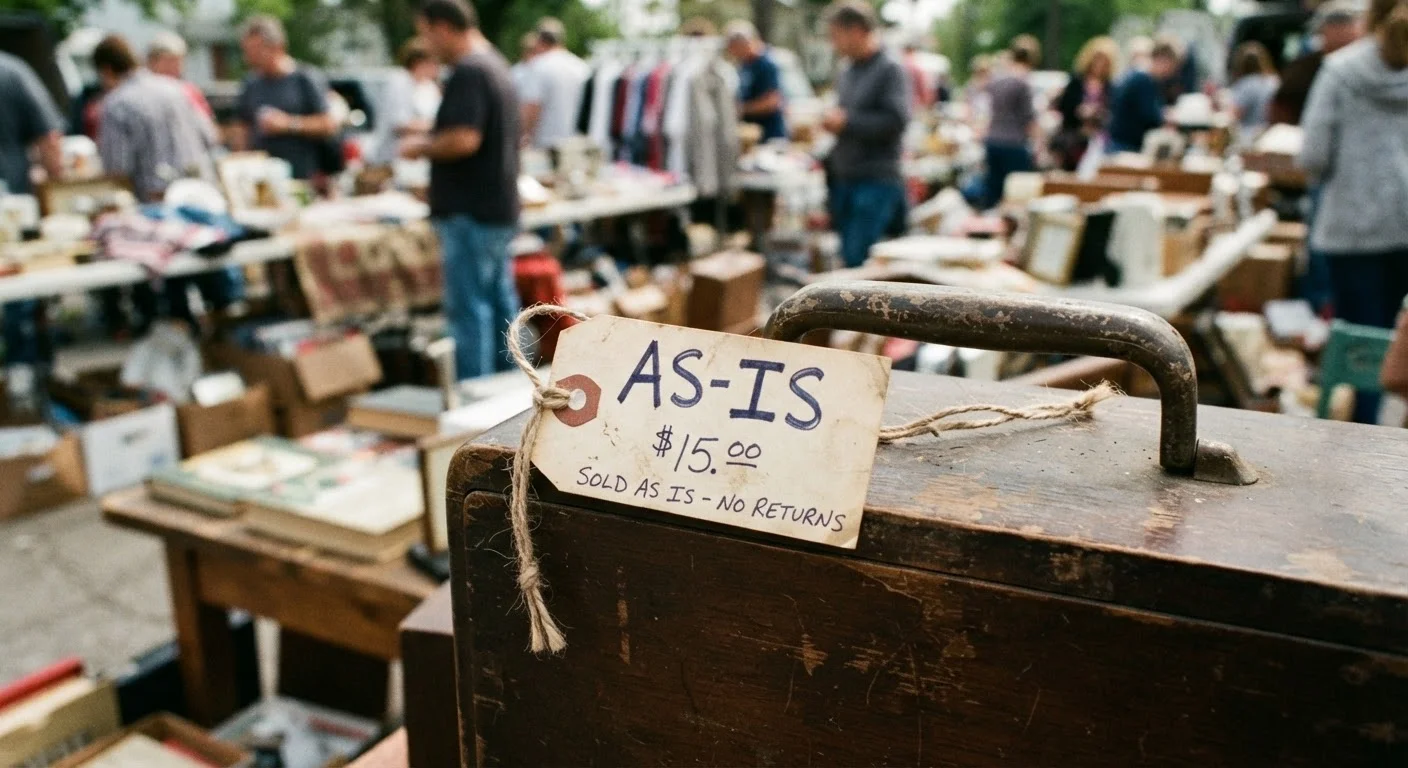
An 'as-is' sale means the seller is offering an item in its current condition, without any promise that it works correctly or is free of defects. The buyer agrees to accept whatever condition the item is in at the time of purchase. This label is commonly used in used-car sales, estate sales, foreclosure home purchases, and some retail clearance situations.
Under the Uniform Commercial Code (UCC), an 'as-is' clause generally disclaims implied warranties of merchantability and fitness for a particular purpose — but courts in many states have held that fraud or concealment can still void that disclaimer.
What 'As-Is' Actually Means in Plain Terms
When a seller marks something 'as-is,' they are communicating one clear thing: they are making no promises about the item's condition, functionality, or fitness for any purpose. If it breaks the day after you buy it, the seller is not obligated to fix it, replace it, or refund you — at least not based on any warranty.
This term shows up frequently in private-party transactions (think Facebook Marketplace, Craigslist, or garage sales), used-car lots, and estate sales. It also appears in real estate — particularly foreclosure and short-sale properties — where the condition of the home can be uncertain and the seller cannot offer guarantees.
The legal foundation for as-is clauses comes largely from the Uniform Commercial Code (UCC), a set of commercial laws adopted in some form by every U.S. state. Under the UCC, sellers can disclaim the implied warranty of merchantability (the basic expectation that a product works for its ordinary purpose) using clear language like 'as-is' or 'with all faults.' For a deeper look at how implied and express warranties interact with this, see our guide on implied versus express warranties.
What as-is does not do is give the seller a blank check to deceive you.
The Protections That Survive an As-Is Clause
State Laws Vary Significantly
Consumer protection rules around as-is sales differ from state to state. Some states prohibit implied warranty disclaimers in retail consumer transactions entirely, meaning an as-is label at a licensed store may carry less legal weight than you'd expect. Always check your state attorney general's website or consult a local consumer protection attorney if you're unsure how your state's rules apply.
Even when no warranty exists, several layers of consumer protection remain in place. Understanding them can help you make a more confident decision — or seek recourse if something goes wrong.
Fraud and Misrepresentation Laws
Sellers cannot legally lie about what they're selling, even if they slap an 'as-is' label on it. If a seller knows about a material defect and actively conceals it — or makes a false statement to induce the sale — that conduct may constitute fraud or misrepresentation under state law. Courts in multiple states have found that an as-is clause does not shield a seller who committed fraud.
State Consumer Protection Statutes
Every U.S. state has an unfair and deceptive acts and practices (UDAP) statute. These laws prohibit deceptive business conduct broadly, and many apply regardless of whether a warranty was offered. Some states go further and restrict the use of as-is disclaimers in consumer-facing retail transactions entirely.
Federal Disclosure Rules
For used vehicles sold by dealers, the FTC's Used Car Rule requires a Buyers Guide that discloses whether the car comes with a warranty or is being sold as-is. Failure to provide this disclosure is a violation of federal law — separate from any warranty question.
Chargeback and Payment Protections
If you paid by credit card and the item was materially misrepresented, you may have the right to dispute the charge under the Fair Credit Billing Act (FCBA). This is a federal protection that applies independent of what the seller said about warranties. Check your card's agreement and contact your issuer promptly, as dispute windows have time limits.
For a broader view of how these protections fit together, our consumer rights overview is a useful starting point.
How to Protect Yourself Before an As-Is Purchase
Always Inspect Before Signing Anything
For any significant as-is purchase — used vehicles, appliances, real estate — arrange an independent inspection before completing the transaction. A qualified professional can surface defects that aren't visible to the naked eye, giving you either a reason to walk away or documented evidence of the item's condition at the time of sale.
Knowing your rights after a bad purchase is useful — but knowing how to reduce your risk before the sale is better. A few practical steps go a long way.
- Get everything in writing. Any statements the seller makes about the item's condition — even verbal ones — should be documented. Write them down and ask the seller to sign or confirm in a message. Documented representations can support a fraud claim if the seller later denies making them.
- Ask direct questions. Sellers are generally not required to volunteer information, but in many states they cannot lie in response to a direct question. Ask specifically: Has this item ever been repaired? Are you aware of any defects?
- Inspect before you buy. For significant purchases — especially used vehicles or appliances — pay for a professional inspection. A mechanic's pre-purchase inspection of a used car, for example, can surface problems a seller may not have disclosed.
- Research state-specific rules. Some states have mandatory disclosure laws that require sellers — even private parties — to reveal known material defects in certain categories of goods (particularly real estate). Your state attorney general's website is a useful starting point.
Understanding what sellers can and cannot disclaim also means understanding what warranties normally cover. Our breakdown of warranties, guarantees, and return policies explains the differences in plain terms.
This article is for general informational purposes only and does not constitute legal advice. Laws vary by state and situation. If you believe you have been defrauded in a purchase, consult a licensed attorney or contact your state attorney general's consumer protection office.