

Money & Finance

Before You Take on a Personal Loan to Pay Off Debt: A Readiness Checklist

Share
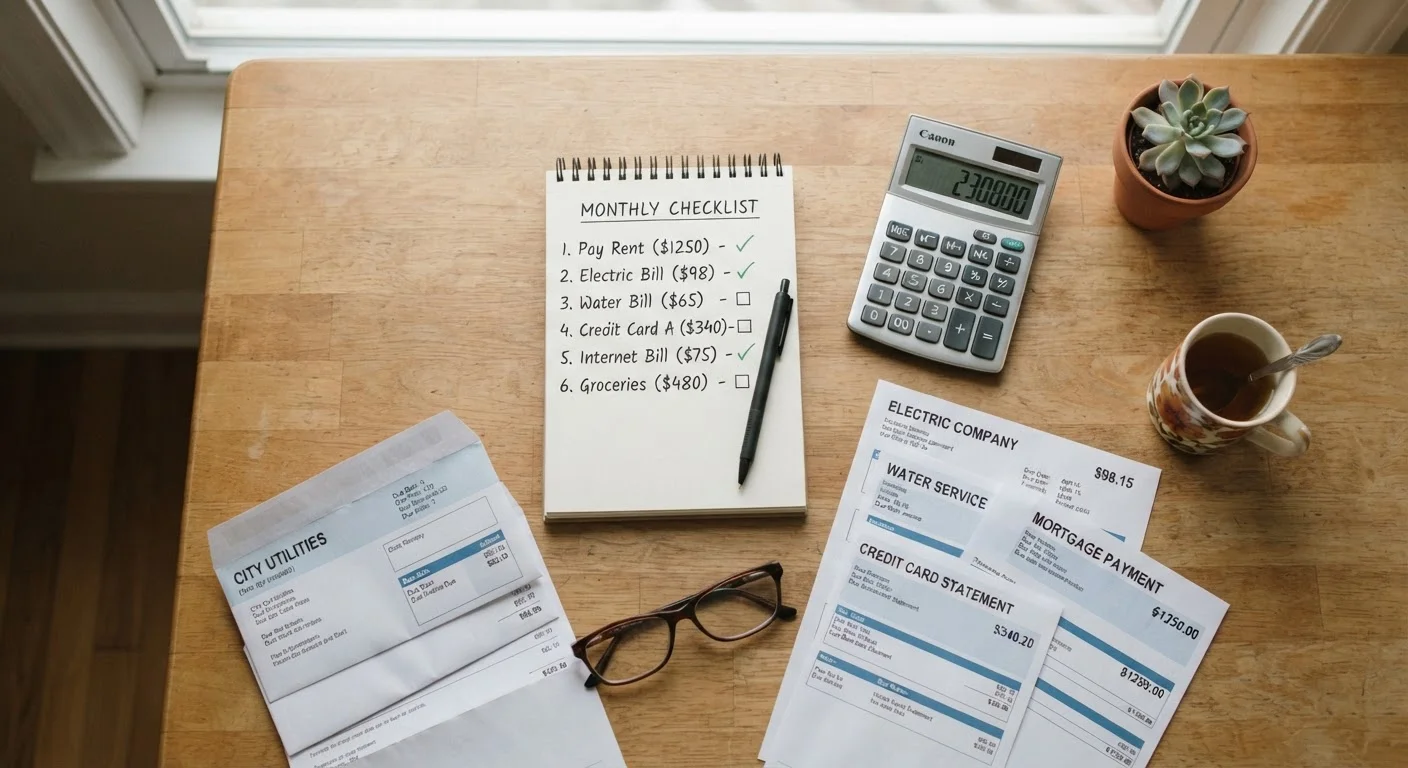
A checklist notepad and calculator on a kitchen table beside household bills and paperwork

Key Takeaways

A personal loan can simplify debt repayment, but only if the new interest rate is meaningfully lower than your current rates.
Your credit score, income stability, and existing debt load all affect what loan terms you can realistically qualify for.
Taking on new debt to pay old debt requires a spending plan change — otherwise you risk ending up with both.
If you cannot commit to closing or freezing the accounts you pay off, a loan may deepen the problem.
Consulting a nonprofit credit counselor before borrowing can help you weigh all available options at no cost.
20–40 min

Summary

18 items · 20–40 minutes

Why a Personal Loan Isn't Automatically the Answer

Debt consolidation through a personal loan is one of the most widely considered options when household bills start piling up. The idea is straightforward: replace several high-interest balances with a single, lower-rate loan and one monthly payment. Under the right conditions, that genuinely works. Under the wrong ones, it can leave you worse off.

The math only favors you if the annual percentage rate (APR) on the new loan is lower than the weighted average rate you're paying across your existing balances. Beyond the rate, lenders will evaluate your credit score, your debt-to-income ratio (DTI — total monthly debt payments divided by gross monthly income), and your employment history. The stronger your financial picture, the better the terms you're likely to be offered.

But numbers alone don't tell the whole story. Borrowing to pay off debt requires a genuine change in spending behavior. If the habits that created the debt are still in place, a consolidation loan often results in a borrower carrying both the loan and new balances on the accounts they thought they'd paid off. That's why this checklist focuses not just on whether you qualify, but on whether the move makes sense for your situation right now.

For a related perspective on managing debt and savings simultaneously, see Keeping Savings and Debt Payoff in Balance at the Same Time.

Know Your Current Debt Picture

List every debt you plan to consolidate, including the balance, interest rate, and minimum payment for each. Must
Calculate the weighted average interest rate across those balances so you have a clear comparison benchmark. Must
Confirm the total amount you need to borrow — pad slightly for any prepayment fees on existing accounts. Must
Note which debts have variable rates that could increase, since consolidating those adds predictability value. Should

Check Your Credit and Income

Pull your free credit report from AnnualCreditReport.com and review it for errors before applying. Must
Know your credit score range — most lenders disclose the minimum score required for their loan products. Must
Calculate your debt-to-income ratio; most lenders prefer a DTI at or below 36%, though some accept higher. Must
Verify that your employment and income are stable — lenders typically want at least two years of employment history. Should

Evaluate the Loan Terms

Confirm the loan's APR — including any origination fee — is lower than your current weighted average rate. Must
Check for prepayment penalties so you know if paying the loan off early will cost extra. Must
Verify the monthly payment fits your budget without cutting into essential expenses or your emergency fund. Must
Compare loan terms from at least two or three lenders using pre-qualification tools that use soft credit pulls. Should
Ask whether the lender offers hardship programs or payment deferrals if your income changes unexpectedly. Nice to have

Plan for Behavioral Change

Commit to a written plan for closing or freezing paid-off credit accounts so you don't accumulate new balances. Must
Identify the specific spending pattern or income gap that created the debt and outline how you'll address it. Must
Set up automatic payments on the new loan to avoid late fees and protect your credit score. Should
Establish or maintain a small emergency fund — even $500–$1,000 — so an unexpected bill doesn't push you back to credit cards. Should
Schedule a check-in date three months after the loan funds to review progress against your payoff plan. Nice to have

How to Use This Checklist

Work through each group in order. Items marked must are non-negotiable — if you can't check them off, address them before applying. Items marked should are strongly recommended. Nice-to-have items strengthen your position but aren't deal-breakers.

Required

AnnualCreditReport.com

Pull your free credit reports from all three major bureaus to spot errors before applying for a loan.

Optional

Nonprofit Credit Counseling (e.g., NFCC member agencies)

Get a free or low-cost review of your debt situation and alternatives to borrowing before you decide.

Required

Spreadsheet or budgeting app

Map out your current debts, rates, and minimum payments to calculate your weighted average interest rate accurately.

Optional

Lender pre-qualification tools

Check estimated loan terms using a soft credit inquiry that won't affect your credit score.

If you're unsure whether a personal loan is the right vehicle — or whether a structured repayment method might get you there without new borrowing — it's worth reading about the debt avalanche and snowball methods before deciding.

Applying Triggers a Hard Credit Inquiry

Every formal loan application results in a hard inquiry on your credit report, which can temporarily lower your score. If you apply to multiple lenders within a short window — typically 14 to 45 days depending on the scoring model — those inquiries are usually treated as a single event for rate-shopping purposes. Avoid applying broadly over several months, as each separate inquiry counts individually and the effect compounds.

This article provides general financial information and education only. It is not personalized financial, tax, or legal advice. For decisions specific to your situation, consult a licensed financial professional.

Money & Finance Editorial Team is the collective byline for our editorial team and contributor network. Articles published under this byline or an editorial pen name are researched, written, and reviewed according to our editorial standards for clarity, consistency, and independence before publication.

View all articles by Money & Finance Editorial Team →
Disclaimer: The content on this site is for informational purposes only and is not a substitute for professional advice. Always consult a qualified professional for guidance specific to your situation.