

Key Takeaways
Why Tomato Skin Splits in the First Place
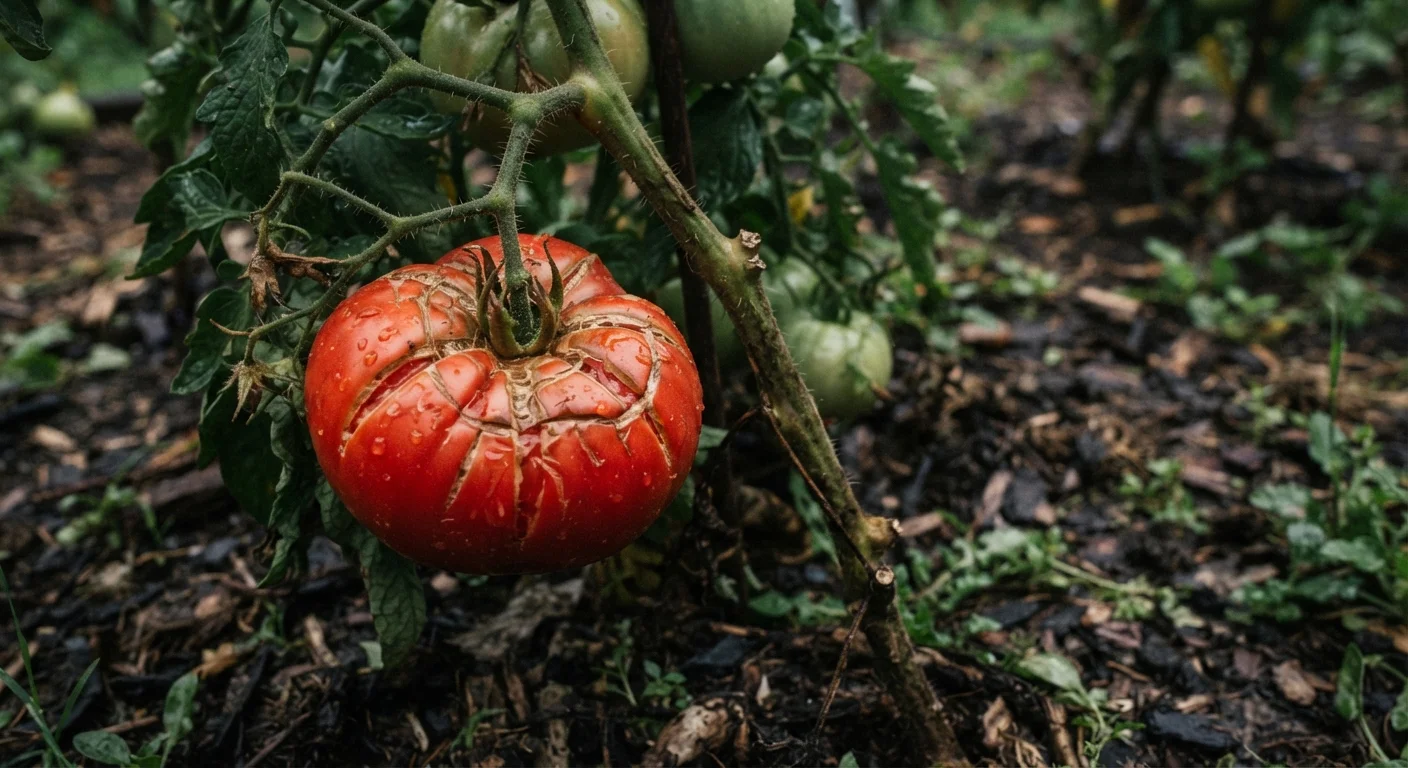
Tomato cracking happens when the inside of the fruit expands faster than the outer skin can keep up. The skin — which is essentially the tomato's protective layer — has a limited ability to stretch. When roots suddenly absorb a large volume of water after a dry period, the flesh swells rapidly, and the skin gives way. Two crack patterns are common: radial cracks run from the stem end downward like spokes on a wheel, and concentric cracks form rings around the shoulder of the fruit. Both are stress responses, and both point to the same underlying cause — inconsistent moisture delivery to the root zone.
Soil plays a central role here because it determines how water reaches the roots. Compacted soil, poor drainage, and imbalanced pH all disrupt the steady, even moisture uptake that keeps fruit development smooth. Calcium, a nutrient that literally holds plant cell walls together, becomes especially important: without enough available calcium, cell walls in developing fruit are structurally weaker and more likely to rupture under pressure.
Cracked Tomatoes Are Still Safe to Eat
Minor surface cracks that close or dry over don't automatically make a tomato unsafe. However, deep splits that expose interior flesh can allow mold, bacteria, and insects to enter quickly. Harvest cracked fruit promptly and inspect it carefully before eating. Discard any fruit showing signs of rot or mold inside the crack.
The Most Common Mistakes That Lead to Cracking
Most cases of cracked tomatoes trace back to a handful of avoidable errors. Understanding why each mistake happens makes it far easier to correct your approach before next season's planting.
Watering irregularly — letting soil dry out completely between waterings, then soaking it.
Why it happens: Gardeners often water by schedule rather than soil condition, or rely on rainfall that isn't consistent enough. A dry week followed by a heavy rain or a deep watering triggers rapid fruit expansion.
Ignoring calcium deficiency by failing to maintain proper soil pH.
Why it happens: Many gardeners focus only on NPK (nitrogen, phosphorus, potassium) fertilizers and overlook calcium, or they apply lime without testing pH first. Calcium is poorly absorbed when soil pH falls below 6.0.
Skipping mulch entirely or applying it too thinly around tomato plants.
Why it happens: Mulching can feel like an extra step, and gardeners sometimes underestimate how dramatically bare soil temperatures fluctuate — which directly affects moisture retention and root uptake behavior.
Planting crack-prone varieties without considering fruit size or skin thickness.
Why it happens: Home gardeners often choose tomato varieties based on flavor or yield descriptions alone, without knowing that large beefsteak types are inherently more crack-prone than smaller, thicker-skinned varieties.
Allowing compacted or poorly draining soil to create unpredictable wet-dry cycles at the root zone.
Why it happens: Clay-heavy or heavily compacted soil holds water in pockets and drains unevenly, so roots experience alternating saturation and drought even when surface watering appears consistent.
Don't Over-Correct with a Flood of Water
When gardeners notice cracking and realize they've underwatered, the instinct is to drench the bed immediately. Doing so causes exactly the same problem — a sudden surge of water forces the fruit to expand faster than the skin can stretch. Gradually reintroduce consistent moisture rather than swinging to the opposite extreme.
Building a Soil and Watering Routine That Protects Your Fruit
Preventing cracks comes down to giving your tomatoes a predictable environment. Start with a soil test every spring — it's a low-cost step that removes the guesswork about pH and nutrient gaps. Work compost into beds generously before transplanting; this improves structure in both sandy and clay soils, moderating how quickly water moves through the root zone.
~30%
Tomato yield lost to cracking annually
University extension research suggests cracking is among the top three causes of marketable yield loss in home and small-scale tomato production.
6.2–6.8
Ideal soil pH range for tomatoes
According to most state cooperative extension services, maintaining this pH range maximizes calcium and nutrient availability for tomato plants.
Once plants are in the ground, consistency is everything. Deep, infrequent watering — aiming for about one to two inches per week depending on temperature — encourages roots to grow deeper and become more resilient to surface dryness. Drip irrigation or soaker hoses make this far easier to manage than hand watering from above. Pair that with a solid mulch layer, and you've created the conditions where crack rates drop substantially. Finally, keep an eye on weather forecasts: if a heavy rain follows a dry stretch, consider covering plants briefly or harvesting any nearly ripe fruit before the rain hits. Picking a tomato at the breaker stage — when it's just beginning to change color — and ripening it on a countertop indoors is a simple, effective safeguard during unpredictable weather.