

Key Takeaways
Why Interview Outfits Feel So Stressful (And Why They Don't Have To)
There's a reason picking an interview outfit feels disproportionately stressful: you're making a decision with perceived high stakes, limited information, and often a tight timeline. The result is overthinking — buying something new you'll never wear again, or spiraling into doubt over something you've had for years.
The reality is that interviewers are focused on your skills, composure, and fit for the role — not your outfit's label or price point. What your clothing does need to do is be clean, appropriate, and comfortable enough that you forget you're wearing it. That's the actual goal.
If you're early in your career or navigating a job search for the first time, our job search starting guide walks through the full picture of landing interviews, so you can focus your energy in the right places.
What you will need
Lint roller
Removes pet hair, dust, and fuzz from clothing for a polished, interview-ready finish.
Clothing steamer or iron
Removes wrinkles from fabric so your outfit looks crisp and intentional.
Full-length mirror
Lets you check your complete look — fit, proportion, and how the pieces work together.
Neutral-colored belt or accessories
Pulls an outfit together and adds a finished quality without being distracting.
Step-by-Step: Building Your Interview Look
Follow these steps in order — they're designed to move from the most impactful decisions first down to the finishing details. Most people find the whole process takes under 30 minutes once they know where to start.
Research the company's dress culture
Before opening your closet, spend ten minutes online. Browse the company's website, LinkedIn page, and any photos from their events or team pages. Look at how employees present themselves. A financial services firm and a design studio will have very different norms — and showing up dressed appropriately signals that you've done your homework.
When in doubt, dress one level up from what employees appear to wear day-to-day. It's easier to remove a blazer than to compensate for underdressing.
Choose your foundation pieces first
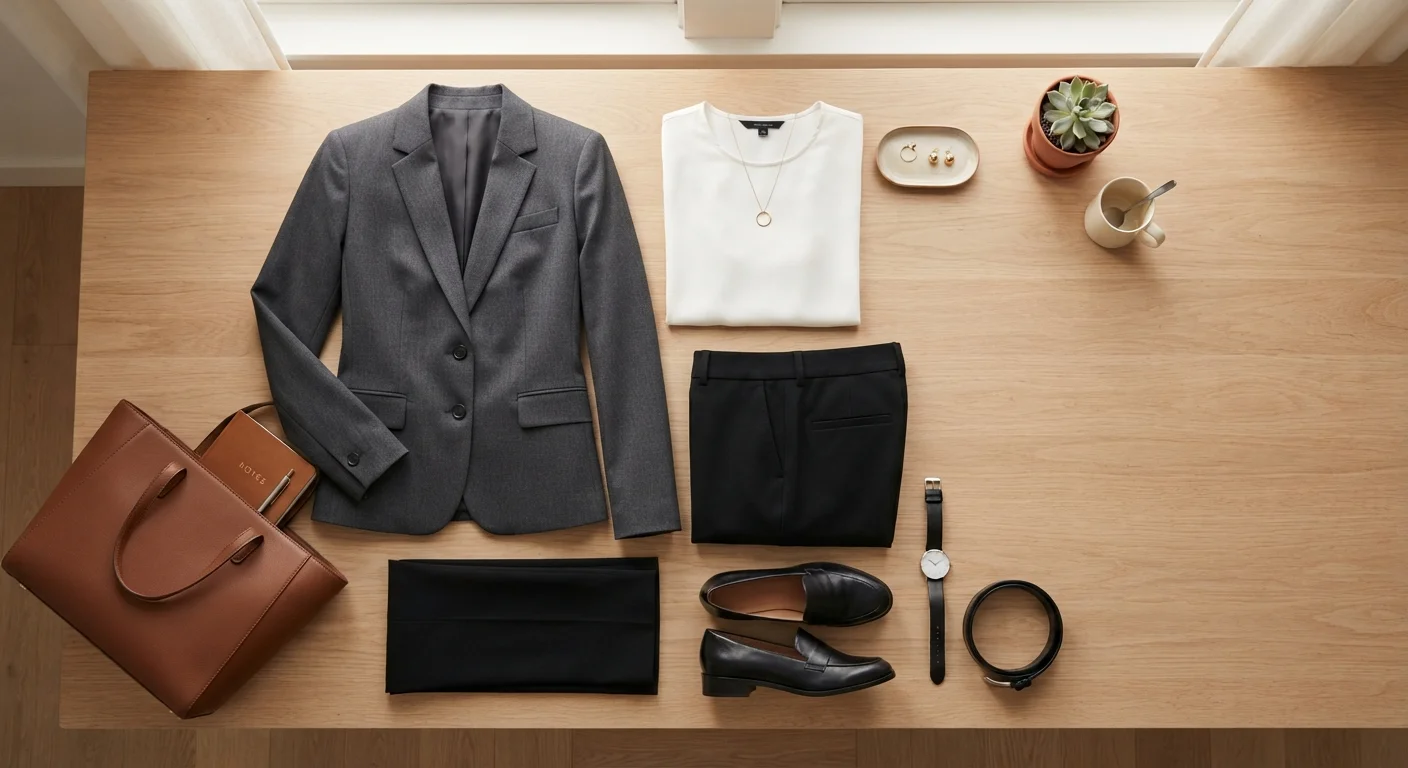
Start with your bottoms and work up. Pick one well-fitting pair of trousers, a skirt, or dress that sits comfortably at your natural waist or hip. Fit is the single most important factor — a modest outfit that fits well reads as far more polished than an expensive one that doesn't.
Stick to neutrals like navy, charcoal, black, or tan for your foundation pieces. These work across industries and don't compete for attention. For guidance on fit and proportion principles, see our guide to dressing well on any budget.
Layer intentionally with a top and optional outerwear
A tucked-in blouse, a clean crewneck sweater, or a structured button-down paired with your foundation piece creates a complete, interview-appropriate look. A blazer or cardigan over your top adds polish and gives you a layer to remove if the office runs warm.
Avoid logos, slogans, or busy prints — these can pull focus away from you as a candidate. Solid colors or subtle patterns keep the attention where it belongs.
Sort out shoes and accessories
Clean, comfortable, closed-toe shoes are the standard for most interviews. They don't need to be brand new — just scuff-free and polished. Make sure you can walk comfortably in them; your body language shifts noticeably when you're uncomfortable on your feet.
Keep accessories simple. A watch, modest earrings, or a clean bag round out a look without making a distracting statement. For occasion-specific guidance, our occasion dressing reference covers professional settings in more detail.
Do a full dress rehearsal the night before
Put on the entire outfit — shoes, accessories, and all — the evening before your interview. Stand in front of a full-length mirror and move around. Sit down, cross your legs, reach forward. Check that nothing rides up, pulls, or gaps. This is also the time to lint-roll, steam any wrinkles, and confirm that everything is clean.
Lay out every piece before you go to bed. Interview morning should be calm, not chaotic.
Wear It Before the Big Day
If any part of your outfit is new or hasn't been worn in a while, test it at home first. Sit, walk, and move in it naturally. Knowing that everything fits and feels right removes a layer of anxiety on the day itself — and that confidence shows.
For more on how body comfort and fit interact with personal style — beyond the tired "dress for your body type" advice — this article offers a more honest perspective that might reshape how you approach your closet.
And if you're wondering about your hair and makeup for the day, our hair and makeup hub has practical, no-pressure guidance for interview-day looks.
This article provides general style guidance for informational purposes only. Individual workplace dress codes vary — when uncertain, it's always appropriate to ask your recruiter or hiring contact directly.